
Running clean
Air comes out warm with no odor, the way it should every time you switch over from cooling to heat. The unit sits in the corner doing its job, and you don't think about it again until next fall.
You turn the mini split over to heat and get a smell out of the vents, maybe musty, maybe like something burning. It wasn't there when the unit was cooling the house over the summer, so it catches you off guard. You want to know if this is something to shut off and deal with now or something that just happens with these units.
A mini split pulls double duty here, cooling through the muggy summers and heating through the winter, and the smell comes from what built up on the coil while it sat running cool and damp for months. Switching over to heat dries that moisture out fast and burns off whatever collected on the coil and in the filter, which is what you're smelling. It usually clears up within an hour or so of the unit running. If it lingers past that, or it smells more like plastic or something electrical than musty, that points to a problem with the unit itself rather than a seasonal switch, and it's worth having someone look at before you run the heat again.

Air comes out warm with no odor, the way it should every time you switch over from cooling to heat. The unit sits in the corner doing its job, and you don't think about it again until next fall.

The casing has gone yellow and dusty, and the smell shows up the moment the heat kicks on. Left alone, that's a sign of what's built up inside the unit, not something that clears on its own.
You switch the mini split to heat for the first cold morning and the smell fills the room before the air even feels warm. Maybe it fades after a few minutes. Maybe it's there every time the unit kicks on, and you've started closing the door to that room instead of dealing with it. You might notice the smell is worse right when it starts up, or that it's stronger on one side of the house than the other. If it smells musty, there's likely moisture sitting somewhere it shouldn't. If it smells burnt or like dust scorching, that's heat hitting something it shouldn't touch. Either way, it's worth running down before the unit's on every day through winter.




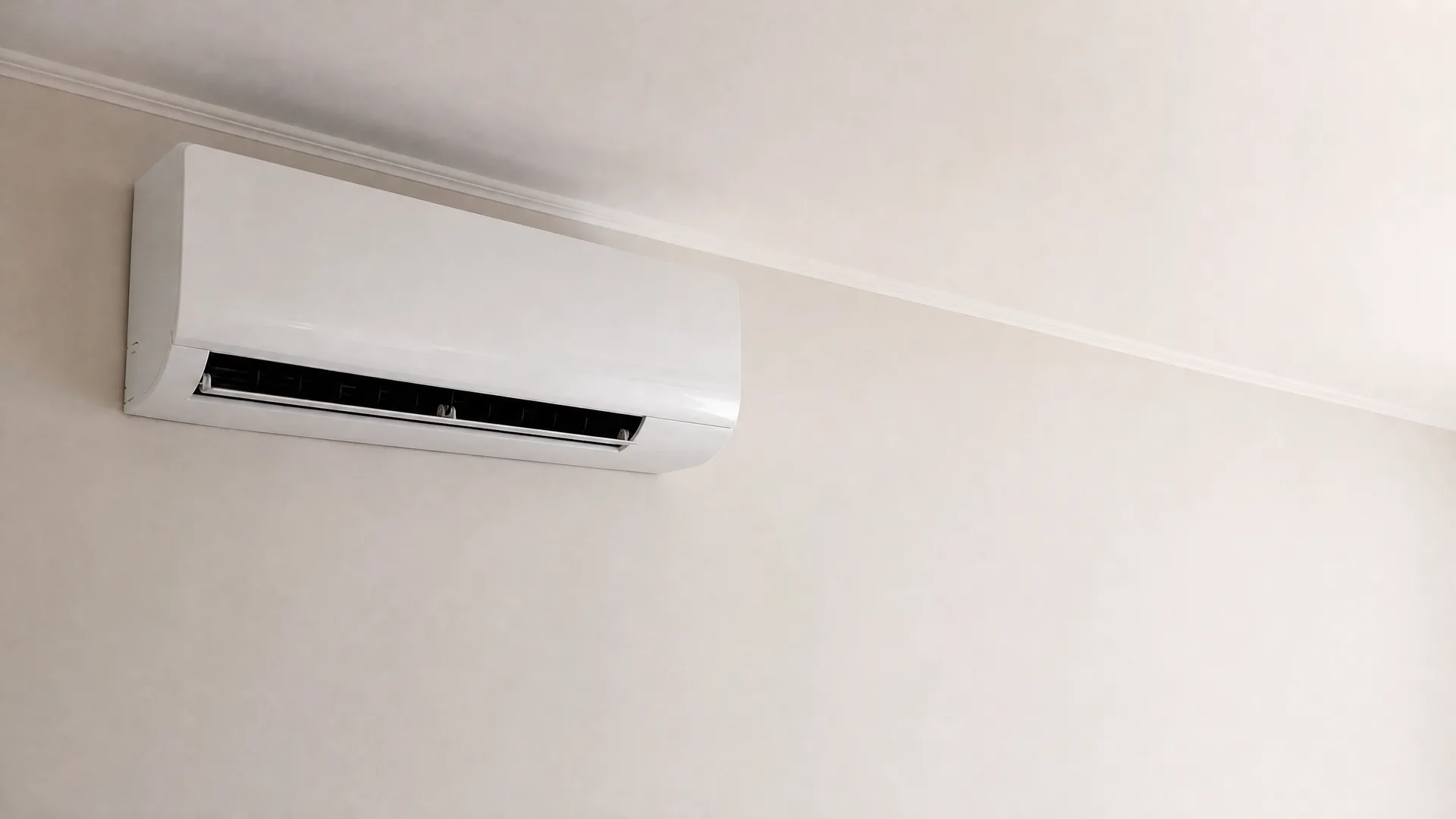
A mini split pulls air across the same indoor coil whether it's cooling or heating. In the summer, that coil runs cold and wet, and any dust or mold sitting on it stays damp and mostly quiet. Switch to heat and the coil runs warm and dry instead. That warmth is what releases the smell. The dirt or moisture was there all along. Heat mode just drives it into the airstream you're standing in front of.
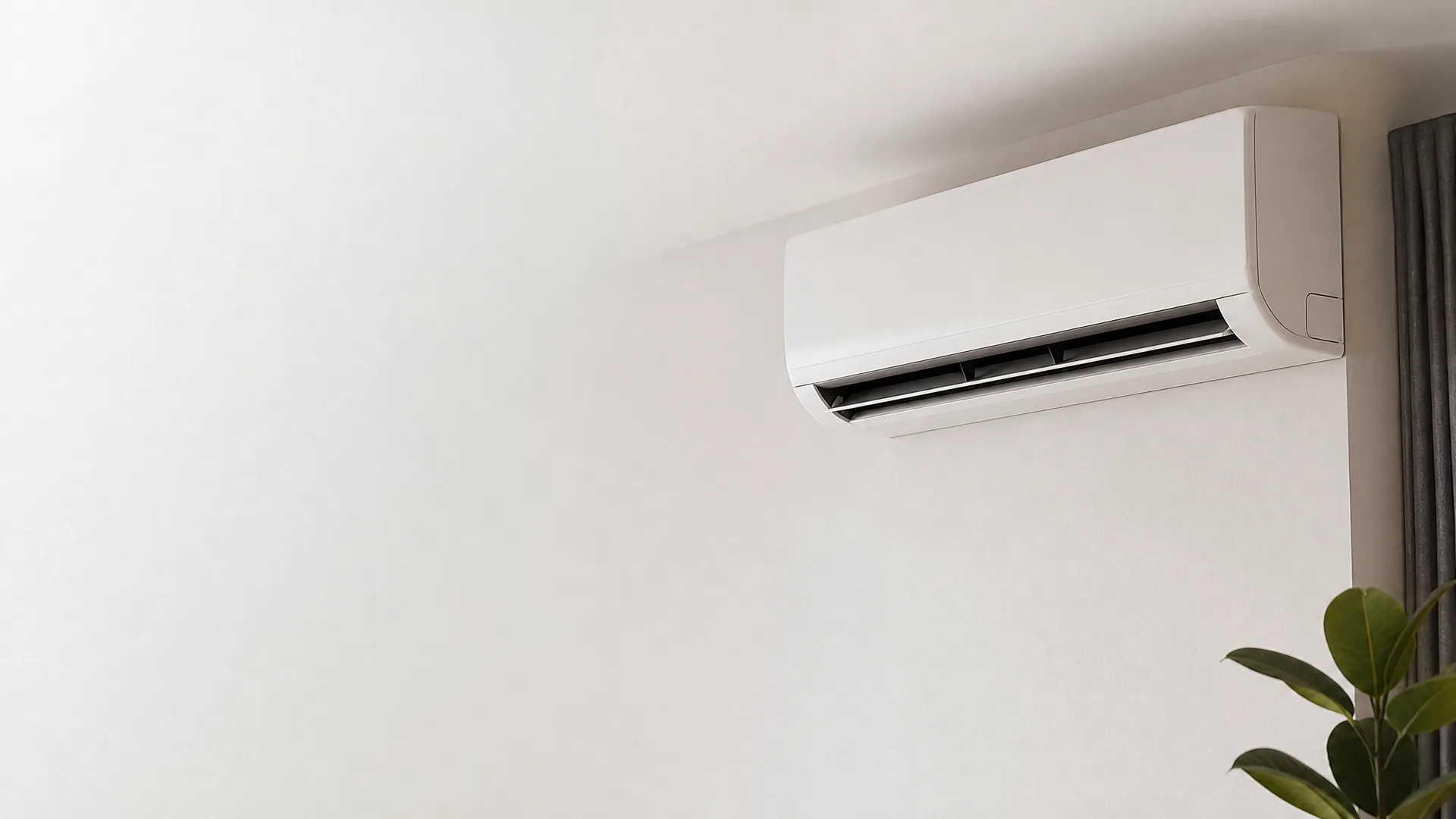
A burning or electrical smell is different from musty, and it's not the coil. Mini splits sit mostly unused for months at a time between seasons, and dust settles on the motor and the electrical components inside the housing. The first time heat mode runs, that dust burns off quickly, often within a few minutes. If the smell lasts longer than that, or comes back every time the unit cycles on, it points to a wiring or motor problem that needs a contractor's attention, not dust.

Heat mode runs the refrigerant cycle backward. The indoor coil, which stayed cold and wet all summer, now runs warm. The blower wheel behind it pulls air through that coil and pushes it into the room. If that wheel has a film of dust and mold built up in its cups, the warm air moving across it carries the smell straight out the vents. A burning smell is different. That points to dust baking off a heating element or a connection that's running hotter than it should, and it's worth having looked at before you run the unit again.
A tech who opens the unit can tell you which one you've got by looking at the coil, the pan, and the wheel itself, and by checking the wiring if the smell is more electrical than musty. That's a different job depending on what's actually dirty or failing in your unit, which is why matching up with someone who handles the specific system you have, and hearing back from them directly, matters more than guessing from a description online.

Reversing valve switches the refrigerant flow to heat mode.
Indoor coil, cold and wet all summer, turns warm.
Dust and mold on the coil dry out and release their smell.
Blower wheel pulls air across that coil and into the room.



Describe what your mini split is doing once, in one form.
A local pro who knows mini splits gets your details and gets in touch.
You only hire the pro if you want to.
At 14.03 cents a kilowatt-hour, running that mini split on heat all winter already adds up, and a dirty coil makes it work harder for the same warmth. Clearing out what's causing the smell is also what keeps the bill from creeping up.
EIA-861 2025 statewide residential average
Open up the indoor unit and there are three places this smell can be coming from, and they're all tucked behind the cover where nobody looks until heat mode brings the problem out. The coil gets blamed first, and it's often guilty, but the blower wheel right behind it is just as likely. That wheel has curved blades with a faint oil film from the motor, and dust grabs onto that film and stays. Once mold or dust builds up on those blades, every bit of air the unit pushes passes straight through it on the way into your room. A clogged wheel doesn't just smell, it moves less air, which means heat mode runs slower and whatever's causing the odor has more time sitting in the room before it clears. Below the coil sits the drain pan, with a line that runs out through the wall. When that line clogs, water backs up into the pan instead of draining outside, and standing water is exactly what mold needs. Some units add a flap or louver near the vent opening, and condensation can collect behind it even when the pan itself is draining fine. None of this involves the outdoor unit. The compressor and fan outside have nothing to do with how your air smells, since the whole problem starts and ends inside the coil, the pan and the blower sitting in your wall or ceiling.



Summers here run humid, with a dew point averaging 70°F across June, July and August according to NOAA climate data. That kind of moisture in the air means the indoor coil stays wet for months while the mini split cools your house. All that dampness gives dust and mold plenty of reason to settle on the coil and the blower wheel behind it. Nothing shows while the unit's running cold. Switch over to heat for the first time that fall and the coil warms up, drying out what built up all summer and sending the smell straight into the room. The muggier the summer, the more there is to dry out.
NASA POWER T2MDEW county cells weighted by homes
The smell when you switch to heat is the coil telling you what built up on it all summer. A musty smell means standing water or mold, a burning smell means dust baking off, and either way a cleaning clears it. You don't have to figure out which contractor in Mississippi handles mini splits, sit on hold explaining the smell to three different companies, or stack up quotes to see who's fair. You already know what's wrong and roughly why. The part left is getting someone out to look at the coil and the blower wheel behind it before the smell is the least of it. Once you're matched with a contractor, that's one call to make, not five, and one explanation instead of repeating yourself every time someone new picks up the phone. The unit itself still needs the work it needs. What changes is how much of your own time goes into finding the person to do it.

Asking costs nothing, and the choice to hire stays yours.
Send the request now and skip the part where you call around Mississippi explaining the smell to three different contractors before one can even look at your mini split. One request gets you matched with someone who handles this and calls you back.