Why your mini split leaks water in a Mississippi winter

Tell a local repair pro what your mini split is doing.

Match me with a pro

A mini split that leaks water in winter usually means the indoor unit is running in heat mode and ice is building up on the outdoor coil, then melting and running off faster than the drain can carry it away. In Mississippi winters, the outdoor temperature swings around freezing often enough that the coil frosts up, the system runs a defrost cycle to clear it, and that meltwater needs a clear path out. If the condensate drain line is clogged with dirt or algae, or the line has a low spot where water pools, the melted ice backs up and drips inside instead of draining outside. A tilted indoor unit or a cracked drain pan will do the same thing. None of this is a sign the whole system is failing. It is a drainage problem, not a refrigerant or compressor problem, and it is worth having looked at before the water starts reaching your flooring or the wall behind the unit.

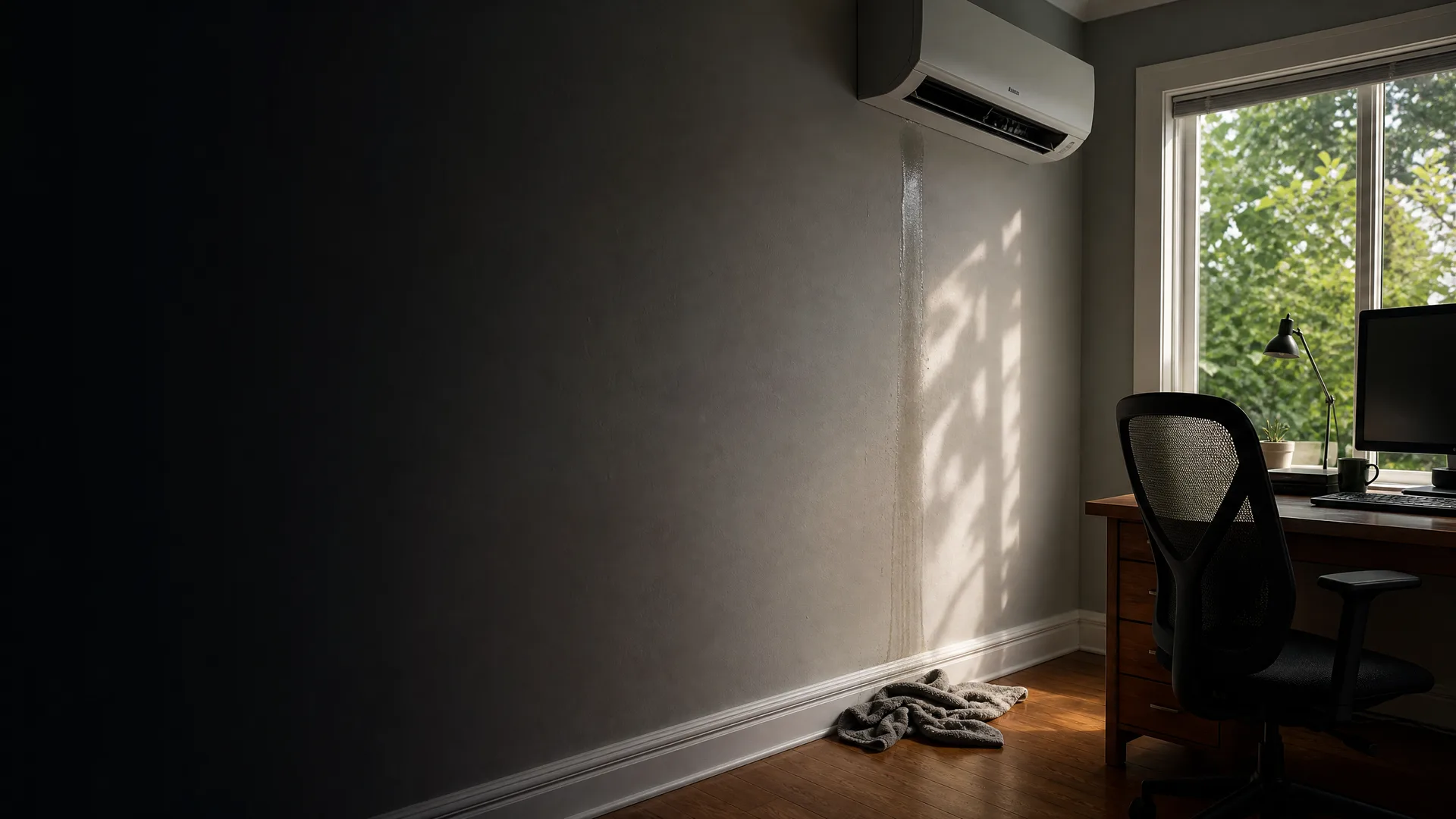
A wall-mounted mini-split air conditioner in a dim room, with a water streak running down the wall below it to a towel on the floor near the baseboard, beside a desk, office chair and monitor by a window.

You're at your desk in the home office on a January afternoon, working through emails, when you notice the carpet under the window feels damp. You look up and see it: a wet streak running down the wall below the indoor unit, starting right at the bottom edge of the mini split and tracking down toward the baseboard. You grab a towel from the hall closet and lay it on the floor, then stand there watching the unit hum along like nothing's wrong. The air coming out still feels warm. You check the streak again a few minutes later. It hasn't grown, but it hasn't dried either.


Why does my mini split only leak water when it's running the heat?

You've noticed the leak only shows up when the mini split is set to heat, never when it's cooling. That's not a coincidence, and it points to something specific going on with the outdoor unit rather than the indoor one. You want to know why heating mode is the trigger before you decide whether this is something to watch or something to get looked at.

It's the defrost cycle, not the indoor coil

In heat mode, the outdoor unit pulls heat from the outside air, and its coil gets cold enough to frost over, especially on the damp, chilly days that show up in a Mississippi winter. The system runs a defrost cycle every so often to melt that frost off. That meltwater is supposed to drain out the bottom of the outdoor unit. If that drain is blocked, angled wrong, or frozen itself, the water backs up and finds another way out, sometimes working its way back toward the indoor unit or the wall it's mounted on. Cooling mode doesn't build frost the same way, so the leak doesn't show up then. That's why the problem looks tied to heat mode specifically.

  1. Outdoor coil frosts over as heat mode pulls warmth from cold air

  2. Defrost cycle kicks on and melts that frost back to water

  3. Melted water runs down to the base pan and drain port

  4. Cold air slows or freezes that water before it drains out

A woman in a cream cardigan and jeans stands with one hand raised facing an open front door of a gray horizontal-siding house, with a black lantern wall light, a potted shrub with yellow flowers, and a stone-faced porch column.

What that leak is doing to your house right now

That wet streak on the wall below the indoor unit isn't going to stay put. Drywall holds water, and once it's soaked it stays soft behind the paint even after the surface dries. If the unit sits above a window or built-in shelf, check there next, because water follows the wall down and pools wherever it meets something flat. Left alone through a few more cold snaps, that's paint bubbling, trim swelling, maybe mold starting in a wall cavity you can't see into.

You already caught this one before it got bad, which is the right instinct. The part you can't tell from looking at the wall is whether the drain line is clogged, cracked, or just pitched wrong, and that's not a guess worth making yourself. Send in what you're seeing and you'll be matched with a contractor who handles mini splits in Mississippi homes, and they'll reach out to sort out the drain from there. That part of it is off your plate once you send it.

A living room corner with a light beige sofa holding a textured taupe cushion, a large ceramic vase of olive branches by a window, a framed neutral artwork on the wall, and a dark bowl with stacked books in the foreground.
A woman in a gray turtleneck sweater stands by a window looking outside at snowy ground, with a dimly lit living room containing a sofa, shelves, lamp and a lit candle behind her.
A woman in a cream cable-knit turtleneck sweater stands in a warmly lit living room with a fireplace and shelves behind her, looking out a window toward snow-covered trees and a railed deck.
A woman in a cream knit turtleneck sweater stands by a window looking out at snow, with a lit fireplace, sofa and lamp in the room behind her.
A woman in a gray knit sweater sits by a window looking out at falling snow, with a dimly lit living room containing a sectional sofa, pillows, a lamp and houseplants behind her.

A pro who works on mini splits

Send it once and finding someone is no longer on you.

No fee to send it, and nothing to sign.

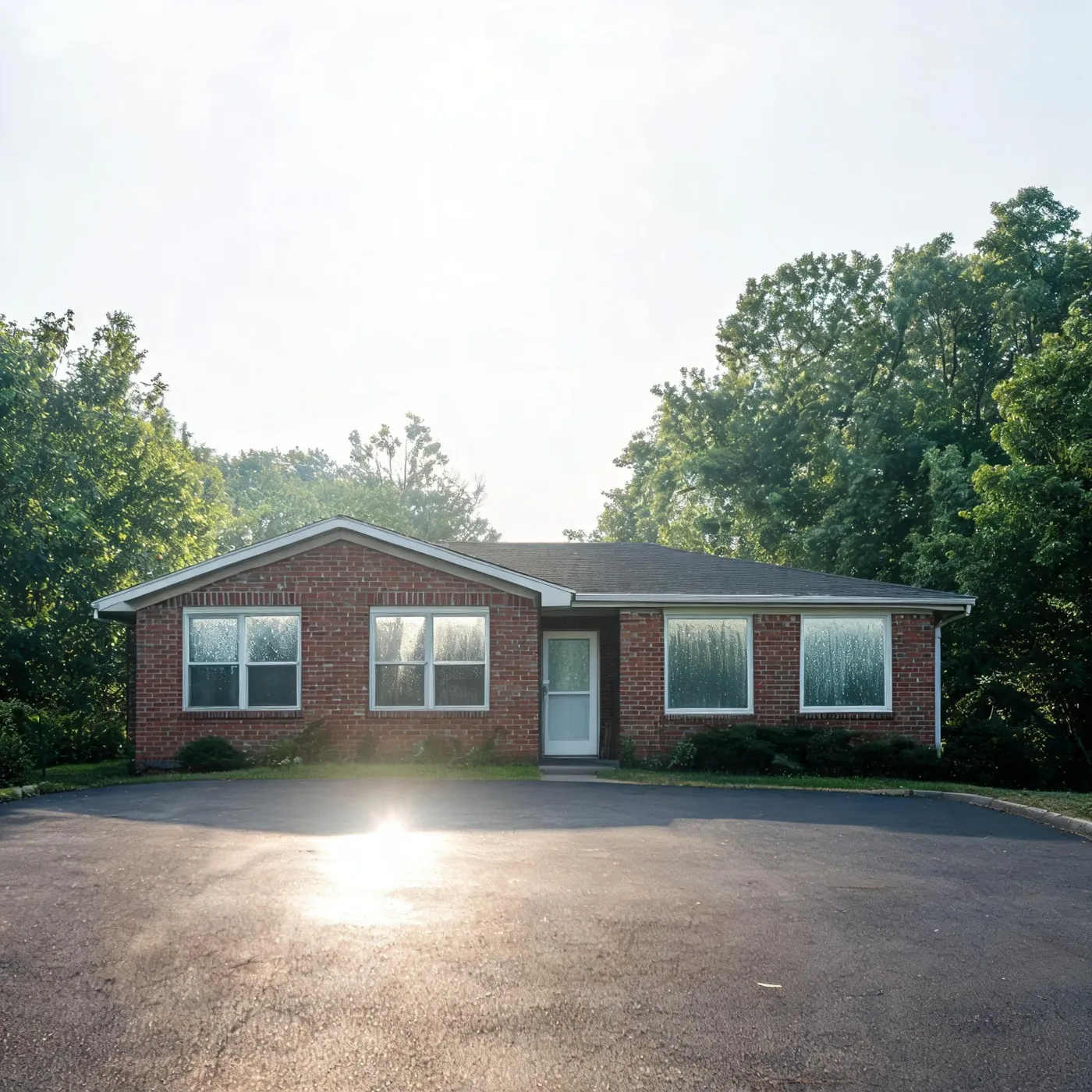
A single-story red brick ranch house with white-framed windows and a white storm door, fronted by a large asphalt parking area and backed by leafy green trees under a bright hazy sky.

Summer here runs humid, with the dew point averaging 70°F across June, July and August, according to NOAA climate data. That's the muggy air your mini split works against all summer, pulling moisture out as it cools. Winter is a different job for the same drain line. The outdoor coil goes through repeated freeze and thaw as it defrosts, and the same channel that carried off summer humidity now has to carry off meltwater in near-freezing air. A drain that ran clear in July can slow down or ice over in January, and that's when water starts showing up where it shouldn't.

NASA POWER T2MDEW county cells weighted by homes

Wait Out the Drip or Call Someone

Let it run

  • The drip usually tracks with the defrost cycle, so it shows up for a few minutes every hour or two and then stops on its own.
  • A small amount of water at the base pan during defrost is normal and doesn't mean the drain or the unit has failed.
  • If the streak on the wall isn't growing and no new damp spots are showing up, the drain line may just be slow, not blocked.
  • Waiting costs you nothing extra in the moment, but drywall that stays damp behind the paint doesn't dry out just because the dripping stopped.
  • Mississippi winters don't stay cold long, so the freezing that's slowing the drain may ease up on its own within days.

Get it looked at

  • A technician can run the defrost cycle and watch where the water actually goes, instead of guessing from a wet wall days later.
  • Clearing the drain port or line usually stops the leak at the source rather than waiting for warmer weather to do it.
  • A contractor can tell you if the ice buildup on the outdoor coil points to something else, like a refrigerant charge that's off.
  • Catching it now means less drywall and insulation to deal with later if that streak keeps spreading down the wall.
  • Electric heat here isn't cheap to run through a Mississippi winter, and a unit struggling to defrost properly is working harder than it should.
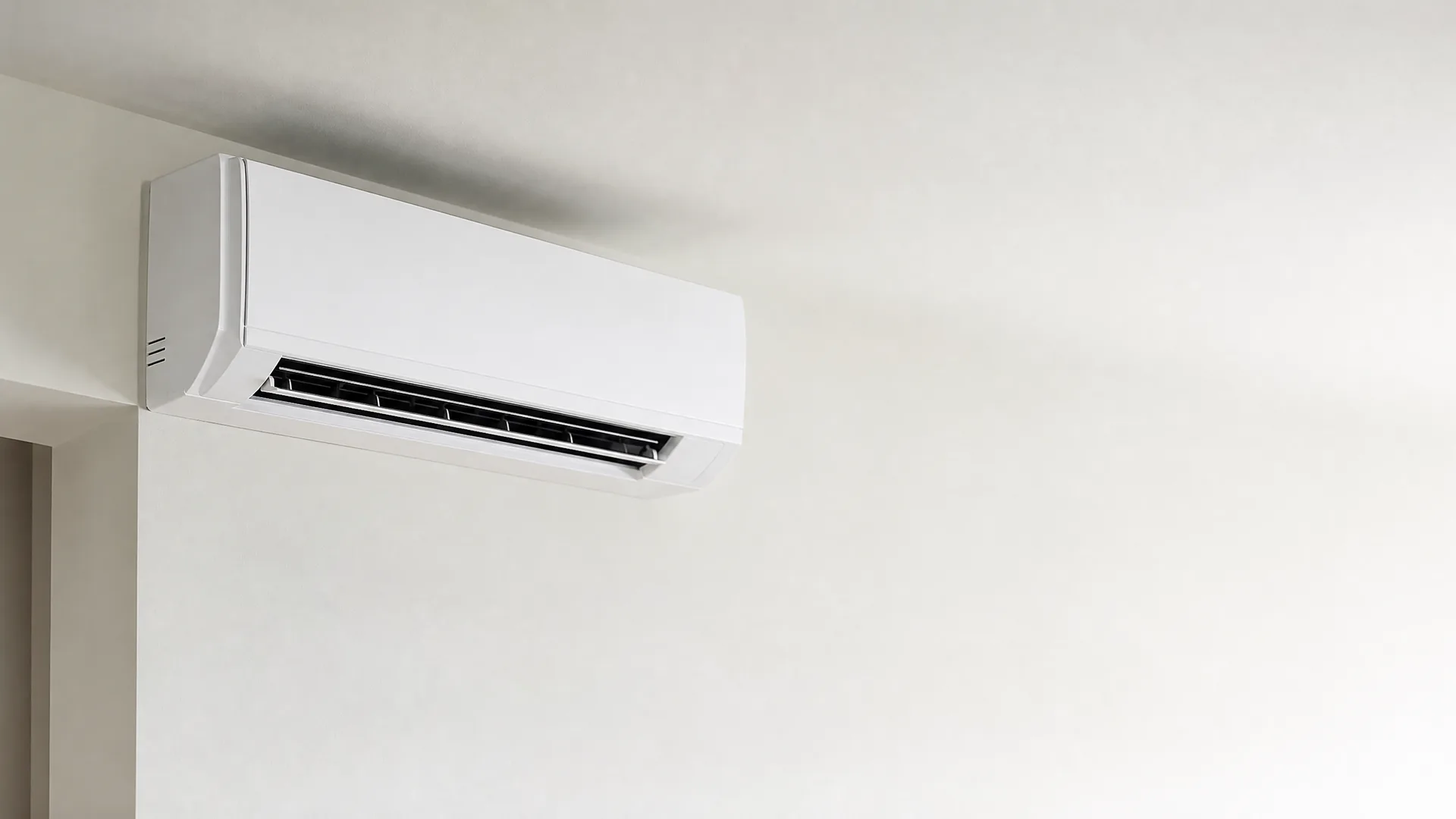
A white wall-mounted mini-split air conditioner unit near the ceiling on a plain light-colored interior wall with open space to the right.

Where the drain line actually runs

The condensate drain line slopes from the indoor unit down to an outdoor exit point, usually low on the wall or through the foundation. That whole run has to keep a steady downhill pitch. If the line sags anywhere, even an inch, water sits in the low spot instead of draining out, and in a cold snap that standing water is what freezes first and backs the whole line up.

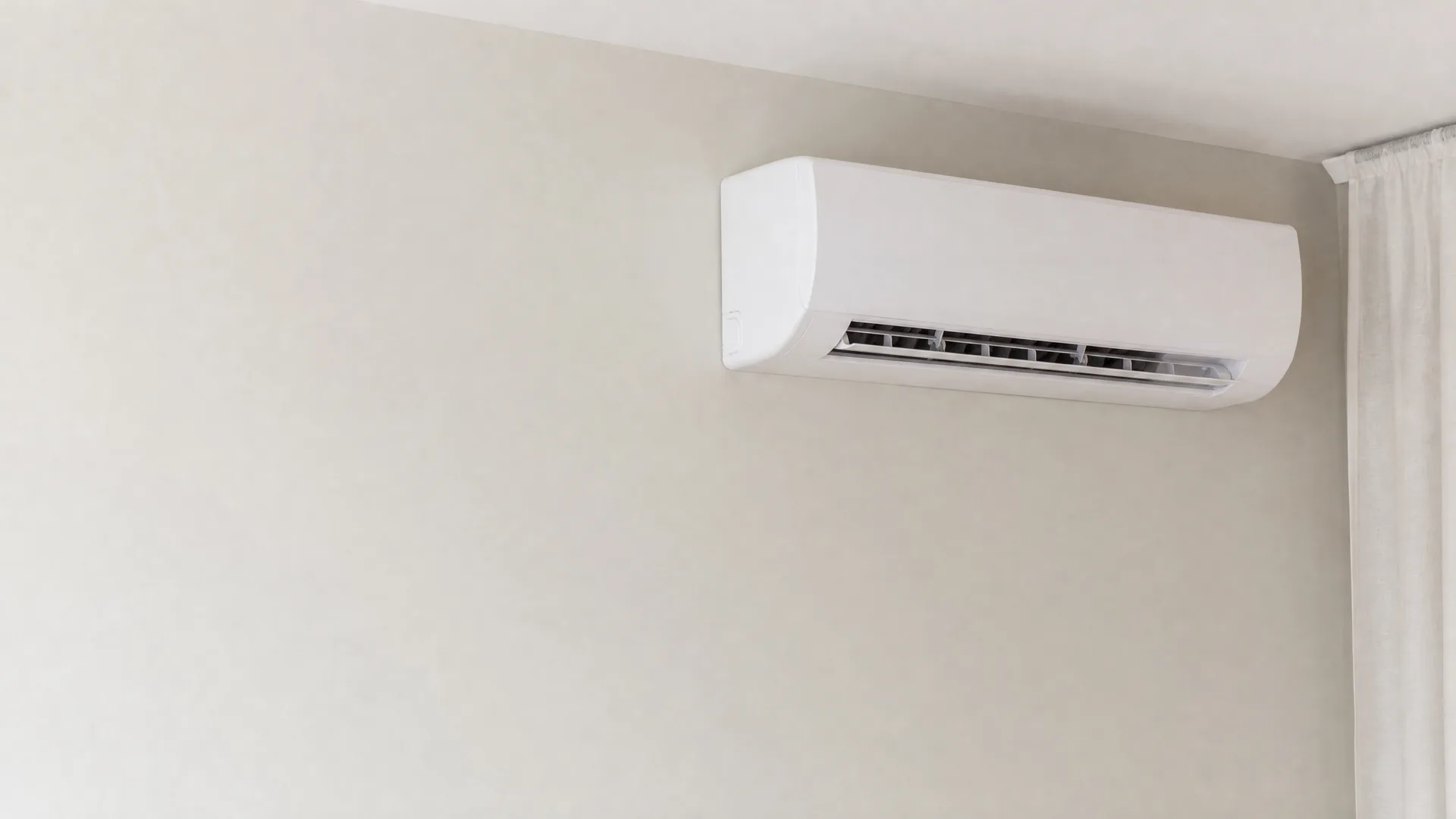
A white wall-mounted mini-split air conditioner unit installed near the ceiling on a plain beige interior wall, with a light curtain at the right edge.

Why the outdoor end matters most

The part of the drain line outside the house gets the least protection from the cold, since it's not touching the warm wall the indoor unit sits on. Defrost water traveling that last stretch cools fast, and a line that was fine in October can start icing shut in January once overnight temperatures in Mississippi drop into the 30s and lower for weeks at a stretch.

What is that water actually doing to your house

Check the wall below the indoor unit and run your hand along the baseboard. If it's soft or the paint has started to bubble, water has been getting behind it longer than you've seen the drip. Look at the floor too, especially if the unit sits over a hallway or a closet. Carpet or wood that stays damp in the same spot every time the heat runs is soaking into what's underneath it, not just sitting on top. If the leak has been going a few weeks, pull back a corner of carpet or check inside the closet below for a musty smell. That's mold getting a start, and it spreads faster in a closed closet than out in the open room.

A white wall-mounted mini-split air conditioner on a beige interior wall, with a curtained window on the left and wood flooring with a light rug below.

Running clean, draining right

A mini split that's draining the way it should doesn't show any of this. The coil behind that front panel stays clear, the pan underneath stays dry, and the line carries water out as fast as the unit makes it. No streak on the wall, no sound of dripping.

A white wall-mounted mini-split air conditioner indoor unit installed near the ceiling on a plain light-colored wall, with its horizontal outlet vent and louvers visible.

Dust, grime, and a slow drain

Dust on the casing and vents means dust inside the unit too, and that buildup is what narrows a drain line until water backs up instead of running out. A unit that's gone a few years without a look is the one most likely to leak.

Power costs 14.03 cents per kilowatt-hour statewide

Since most Mississippi homes heat with electricity, your mini split is likely carrying the whole load this winter, and at 14.03 cents per kilowatt-hour, a unit fighting ice on the outdoor coil instead of heating efficiently runs longer to do the same job. A leak you catch early keeps that bill from climbing along with the damage.

EIA-861 2025 statewide residential average

What the leak is telling you

  • Water from a mini split in winter almost always starts with ice on the outdoor coil during the defrost cycle, not a plumbing problem.
  • A clogged or sagging drain line turns normal defrost melt into a steady drip instead of water that clears out on its own.
  • The leak showing up only in heat mode, never in cooling, points straight at the defrost and drain path rather than the indoor coil.
  • Left alone, that water soaks into drywall and flooring and keeps causing damage even after the drip stops.
  • A unit fighting ice on the coil runs longer to heat the same space, adding to a bill already carrying the full winter load.
  • Checking the drain line's pitch and the base pan for standing water tells you which part of that path needs a look.

The water under your mini split this winter is coming from a specific place: ice forming on the outdoor coil while the unit runs in heat mode, then melting faster than the drain can carry it off. That's the whole story. It's not a sign the unit is failing, and it's not a plumbing issue in the usual sense. It's a drain path that can't keep up with what the defrost cycle is sending it.

Once you know that, the rest of what you've seen makes sense. The leak only shows up in heat mode because cooling mode never builds ice on that coil. The drip tracks with the defrost cycle because that's when the melt happens. And if the drain line sags or the base pan has standing water in it, that's the bottleneck, not the coil itself.

None of that means the water stops mattering once you understand where it's from. Drywall and flooring don't care why they're wet. They absorb it either way, and the unit keeps running longer than it should to heat the same rooms, which shows up on a bill that's already carrying the whole house through winter.

The fix starts with the drain line's pitch and whatever's sitting in that base pan. That's where the problem is, and that's where it gets solved.

A bearded man in a plaid flannel shirt stands in a kitchen looking out a window toward snow-covered shrubs, with a steaming mug on the windowsill and potted plants on a shelf behind him.
A smiling man with dark curly hair in a navy t-shirt sits on a gray couch indoors, with a large-leafed plant and a window in the background.

Mini Split Repair

Get your mini split to the right pro

Send the request today and let a mini split pro reach out to you.

A black-framed smartphone standing upright against a plain white background, its screen filled with solid green.
Step 1 of 3: Equipment