Why your mini split has ice on it in a Mississippi winter
Describe your mini split job once, to one pro.
A mini split with ice on the outdoor unit in the middle of winter is not normal, even on a cold night in Mississippi. A little frost in defrost cycling is one thing. A coil caked in ice, or a buildup that doesn't clear after a few hours, means something is wrong, usually low refrigerant, a stuck reversing valve, or a defrost control that isn't telling the unit to cycle out of heating and melt itself off.
Since most homes here heat with electricity, a mini split that's icing up and running poorly is costing you more to run while it does a worse job of heating the house. That's reason enough to get it looked at instead of waiting for a warmer stretch to melt it off on its own.
Finding someone to deal with it is its own chore. You could spend an evening searching for HVAC companies, calling two or three, telling each one the same thing about the ice and the noise and when it started, then waiting on quotes to compare before you even know who's showing up. Most of that work has nothing to do with fixing your mini split.
This page sends your information to one licensed contractor working in Mississippi, not several, so you're not fielding calls from companies you never meant to contact. The contractor who gets it is local and works on mini splits through winters like this one, where the outdoor unit runs for hours in damp, cold air and ice is the first sign something in the system has failed. That's the kind of problem they see every season, not a one-off.
What's below walks through why mini splits ice up in weather like this, what's normal and what isn't, and what a contractor will likely check first. When you're ready for someone to look at the unit itself, the request goes to that one contractor and the searching part is done.
Why does my mini split have ice on it even though it's winter in Mississippi?
Mississippi winters don't get brutally cold, so seeing ice on the outdoor unit of your mini split can feel backwards. If it were January in Minnesota, maybe. But when it's 40 degrees outside and the coil is caked in frost, something about the system isn't working the way it should, and that matters when you're counting on it to keep the house warm.
Ice means the unit isn't moving heat the way it's supposed to
A mini split pulls heat from the outside air even on a cold day, and that process naturally frosts the coil a little. The unit is built to melt that off on its own a few times a day. Ice that stays, or keeps building, usually means that defrost cycle isn't happening or the system is short on refrigerant, so the coil runs colder than it should and frost keeps forming faster than it clears. A dirty coil or a fan that isn't moving enough air across it can do the same thing. Since Mississippi winters rarely drop low enough to explain heavy ice on their own, a coil that stays frosted points to the unit itself needing a look, not the weather.
Frost that clears on its own
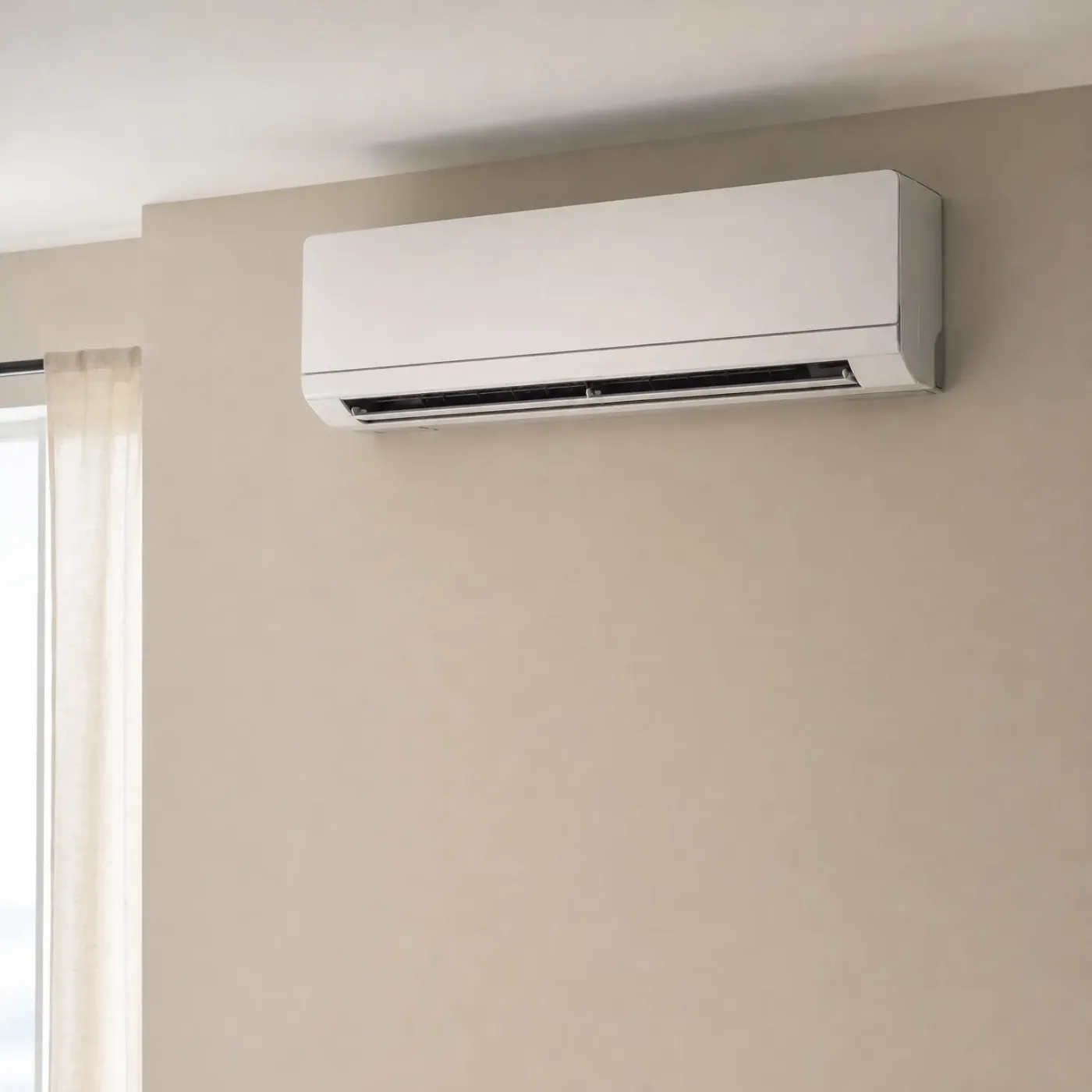
A mini split in a normal defrost cycle builds a light frost on the outdoor coil, then melts it off on its own within thirty minutes or so. The indoor head keeps blowing warm air the whole time, and the room stays even. You'd barely notice unless you walked outside.
Ice that keeps building
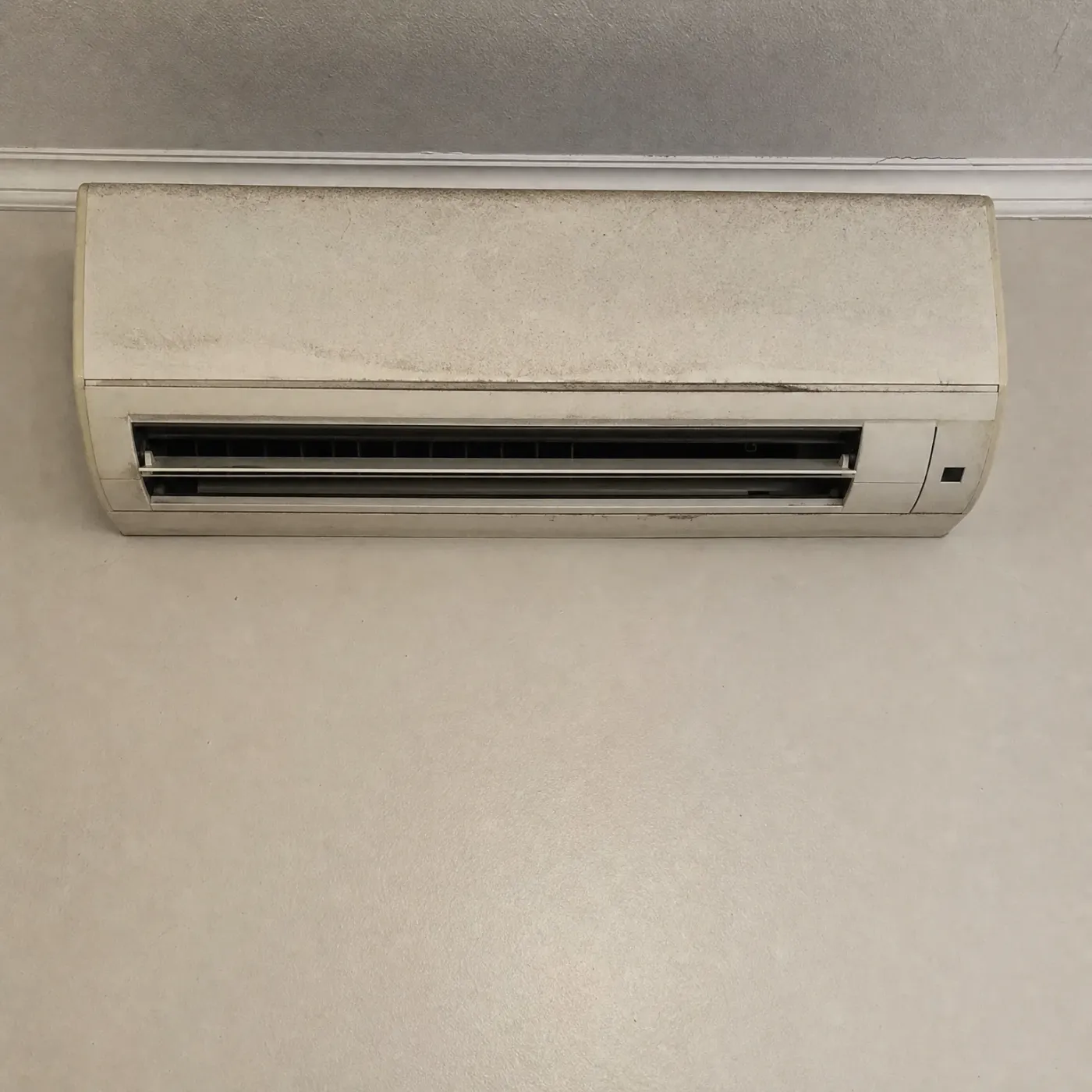
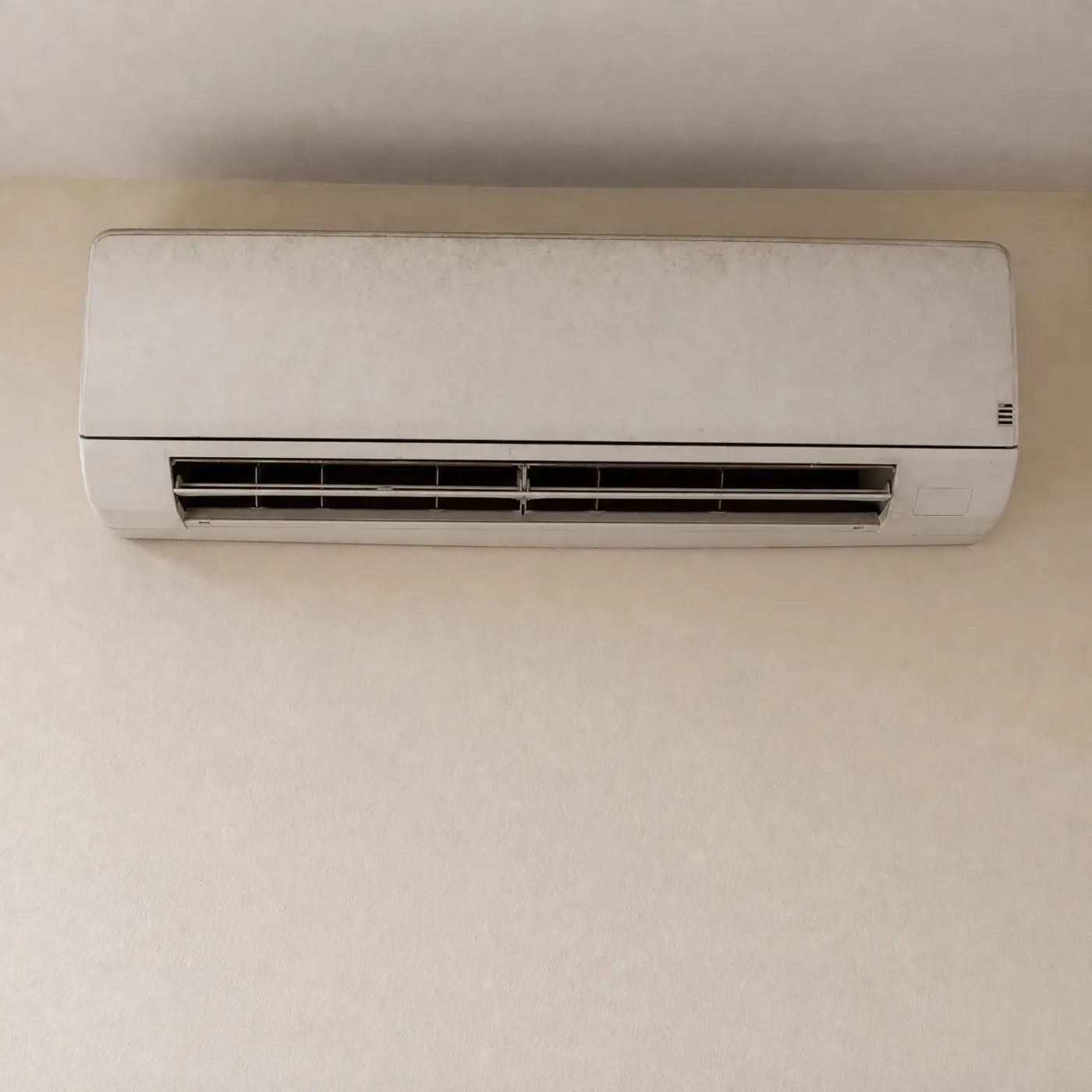
A mini split in trouble looks like this unit: panel and louvers caked with dust, coil underneath doing the same. Ice builds instead of clearing, air coming from the indoor head runs cool instead of warm, and the outdoor fan may struggle to turn at all under the buildup.
Is this the ice that means something's wrong?
Go look at the outdoor unit. If the coil is covered in a solid sheet of ice, or if ice is creeping onto the pipes and the base pan, that's not a normal defrost cycle. Check the indoor head too. If it's blowing air that feels barely warm, or not warm at all, and the room it's supposed to heat is cooling off, the system is losing the fight against the ice instead of running past it. Left alone, this usually doesn't clear on its own overnight. A mini split that keeps running with a frozen coil is working harder for less heat, and the people in that room are the ones who feel it, sitting under a vent that used to keep them warm and doesn't anymore.
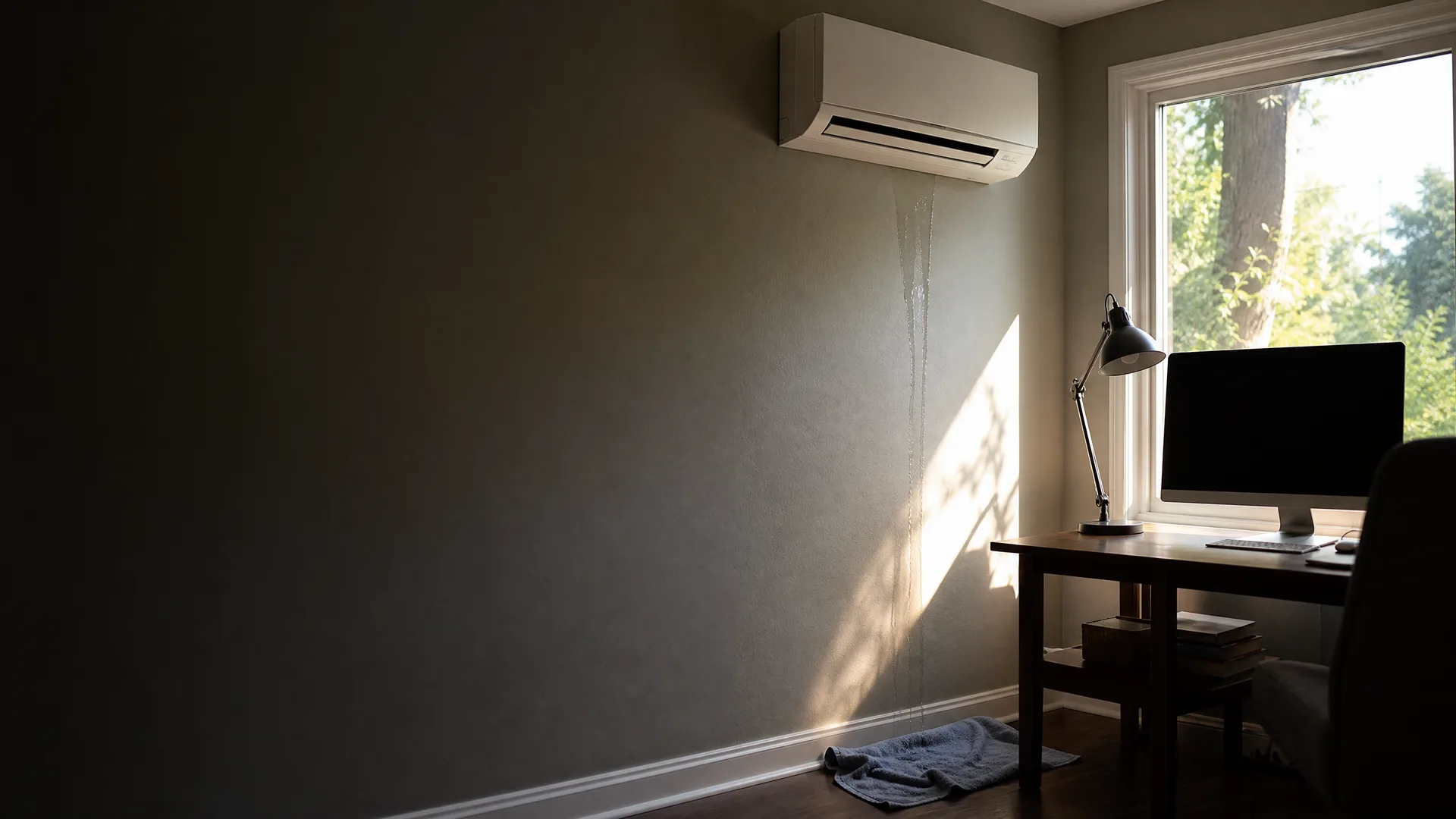
You're at your desk working from home on a January afternoon when you notice the wall under the indoor unit is wet. A thin streak runs down the drywall, and when you look closer there's water pooling on the floor. You grab a towel and press it against the baseboard, but it soaks through fast. The unit above is still running, air coming out weak and lukewarm instead of warm like it should. Outside, the sun is out and it's maybe 45 degrees, nothing close to freezing. You check the outdoor unit through the window and the coil is coated in ice, thick enough that you can see it from across the yard. The towel on the floor is already heavy.
A mini split runs the reversing valve backward in defrost, sending hot gas to the outdoor coil to melt ice off it.
The outdoor fan shuts off during defrost so heat stays on the coil instead of blowing away into the yard.
A thermistor on the outdoor coil tells the control board when enough frost has built up to start a defrost cycle.
Low refrigerant charge drops the pressure on the outdoor coil low enough that frost forms faster than normal defrost can clear it.
A failed defrost sensor or stuck reversing valve can leave the unit running the heat cycle while ice keeps building outside.
A dirty outdoor coil blocks airflow, so the coil runs colder than it should and frosts over before the defrost timer kicks in.
Every mini split that heats a home also has to defrost itself, and the process is more involved than it looks from outside. The system runs on a reversing valve, the same part that lets it switch between cooling your house in summer and heating it in winter. During a defrost cycle, that valve flips direction and sends hot refrigerant gas out to the outdoor coil instead of the indoor head. At the same time, the outdoor fan shuts off, because moving air would just carry that heat away into the yard instead of melting the ice sitting on the coil. A thermistor mounted on the outdoor coil is what tells the control board when this needs to happen. It reads the coil temperature, and once frost has built to a certain point, it signals the board to start the cycle. That part only melting the ice should take care of itself, cycle after cycle, all winter.
Where it breaks down is usually one of two places. If the system is low on refrigerant, the pressure on the outdoor coil drops lower than it should, and frost forms faster than a normal defrost cycle can keep up with. Or the defrost sensor itself fails, or the reversing valve sticks, and the unit just keeps running the heat cycle while ice piles up outside with no defrost ever kicking in. A dirty outdoor coil causes a similar problem from a different angle. Blocked airflow makes the coil run colder than it's supposed to, so it frosts over before the thermistor and timer would normally call for a defrost.
Low refrigerant charge and ice
A mini split that's low on refrigerant runs its coil colder than it's designed to. Cold enough, and the moisture in the outdoor air freezes onto the coil faster than a normal defrost cycle can clear it. This is one of the most common reasons a coil ices over and stays iced instead of clearing within the half hour you'd expect. A low charge usually means a leak somewhere in the line set or at a fitting. Topping off refrigerant without finding the leak just buys a little time before the ice is back, which is why a tech has to track down where it's escaping before refilling it.
Airflow problems do the same thing
Ice also builds when the outdoor coil isn't getting enough air across it. A fan motor running slow, a coil packed with leaves and dirt, or a unit boxed in too close to a fence or wall can all starve it of airflow. Less air moving across the coil means it runs colder than it should, and the same freezing happens even with a full refrigerant charge. This is worth ruling out first because it's the cheaper fix. A tech can check fan speed and look at the coil fins in a few minutes, before ever opening up the refrigerant lines to look for a leak.
Power costs 14.03 cents per kilowatt-hour statewide
At 14.03 cents per kilowatt-hour, running your mini split's heat strip or backup resistance heat to cover for a unit that's icing up and losing heat adds up fast. A frozen coil makes the system work harder and lean on that backup heat more than it should.
EIA-861 2025 statewide residential average
Keep running it and hope the ice clears on its own, and you risk the compressor itself. A compressor that keeps pulling in refrigerant that isn't picking up heat right can fail outright, and that's a far more expensive repair than whatever's causing the ice.
Get a contractor local to Mississippi out to look at it, and someone who works on mini splits all winter here checks the refrigerant charge, the defrost board, and the outdoor sensor, and tells you which one is actually failing before it takes the compressor with it.
Summer here runs heavy. Averaged across June, July and August, the dew point in Mississippi sits around 70°F, according to NOAA climate data, and that's the number that tells you how much moisture is actually hanging in the air, not just the temperature. Your mini split spent those months pulling gallons of water out of that air through its indoor coil. All that moisture passing through the system leaves residue behind on the coil and in the drain pan, and residue narrows airflow and slows drainage. Come winter, a coil that isn't draining or breathing right runs colder than it should, and that's part of what lets ice take hold instead of clearing off on its own.
NASA POWER T2MDEW county cells weighted by homes
Before you get your mini split repairAfter you get your mini split repair
Running the way it should
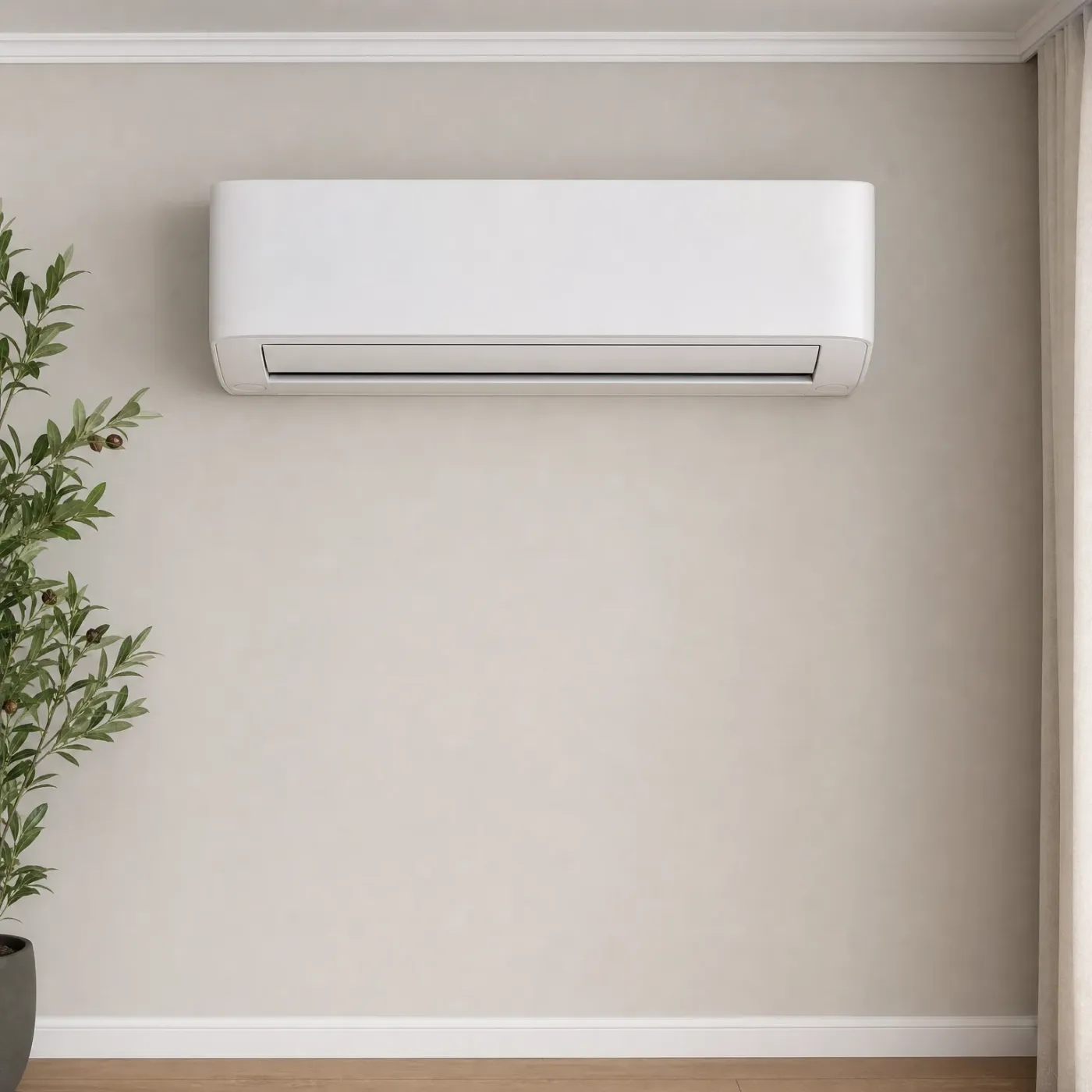
The coil underneath stays clean, the vent swings open and shut on its own schedule, and warm air comes out steady. No ice on the lines outside, no water where it shouldn't be. This is what a working mini split looks like on a cold night here.
Running into trouble
Dust and grime built up on the vent and the discoloration on the housing are signs this unit has gone a while without service. Paired with ice outside, it points to a system that's been struggling longer than just this cold snap.
Ice that doesn't melt within a defrost cycle means the mini split needs a look, not a wait. Low charge, a failing thermistor, a defrost board that's stopped switching the cycle, a dirty filter starving the coil of airflow: any of these can be behind it, and they don't sort themselves out. What you need is someone who works on these systems through a Mississippi winter and already knows which of those is most likely given what you're seeing on the unit. A local, licensed contractor who handles mini splits all season can look at the coil, check the charge, and tell you straight what's failing, and you'll hear back from one contractor, not a handful of companies competing for the job. That's one call instead of several, one visit instead of comparing quotes from strangers, and someone showing up who's seen this exact ice before on someone else's wall in someone else's January. The ice tells you something's off. Getting the right person to look at it is the part you don't have to figure out alone.
Skip the search
Your request goes to one pro, not a list of companies.