
Mini split smells musty in Jackson, MS
Get matchedA musty smell from a mini split usually means moisture sitting where it shouldn't, inside the indoor unit or in the line set. Summers around Jackson stay muggy for months, and that kind of damp air gives mold and mildew plenty to work with inside the unit. It's not something to leave alone, and it's not always obvious what's causing it from the outside. A local contractor who services mini splits all season knows where that smell tends to start on this equipment and what to check first. Get matched with one who works in Hinds County, and they'll reach out to you directly, no list of companies calling, just the one who can actually look at your system.
That musty smell usually comes from the evaporator coil or the drain pan under it. Mini splits pull moisture out of the air all summer long, and that water has to drain out through a small condensate line. If the line clogs with algae or the pan doesn't drain right, water sits there instead of leaving the unit, and mold starts growing on the coil and inside the blower housing. Jackson's long muggy stretch from spring into fall means the unit is pulling moisture out of the air almost constantly, so there's more water passing through that drain system than in a drier climate, and more chances for it to back up. A dirty filter makes it worse, since it slows airflow across the coil and lets condensation linger instead of evaporating off. The smell itself won't go away on its own, and left alone it tends to spread into the ductwork or room air every time the unit runs.
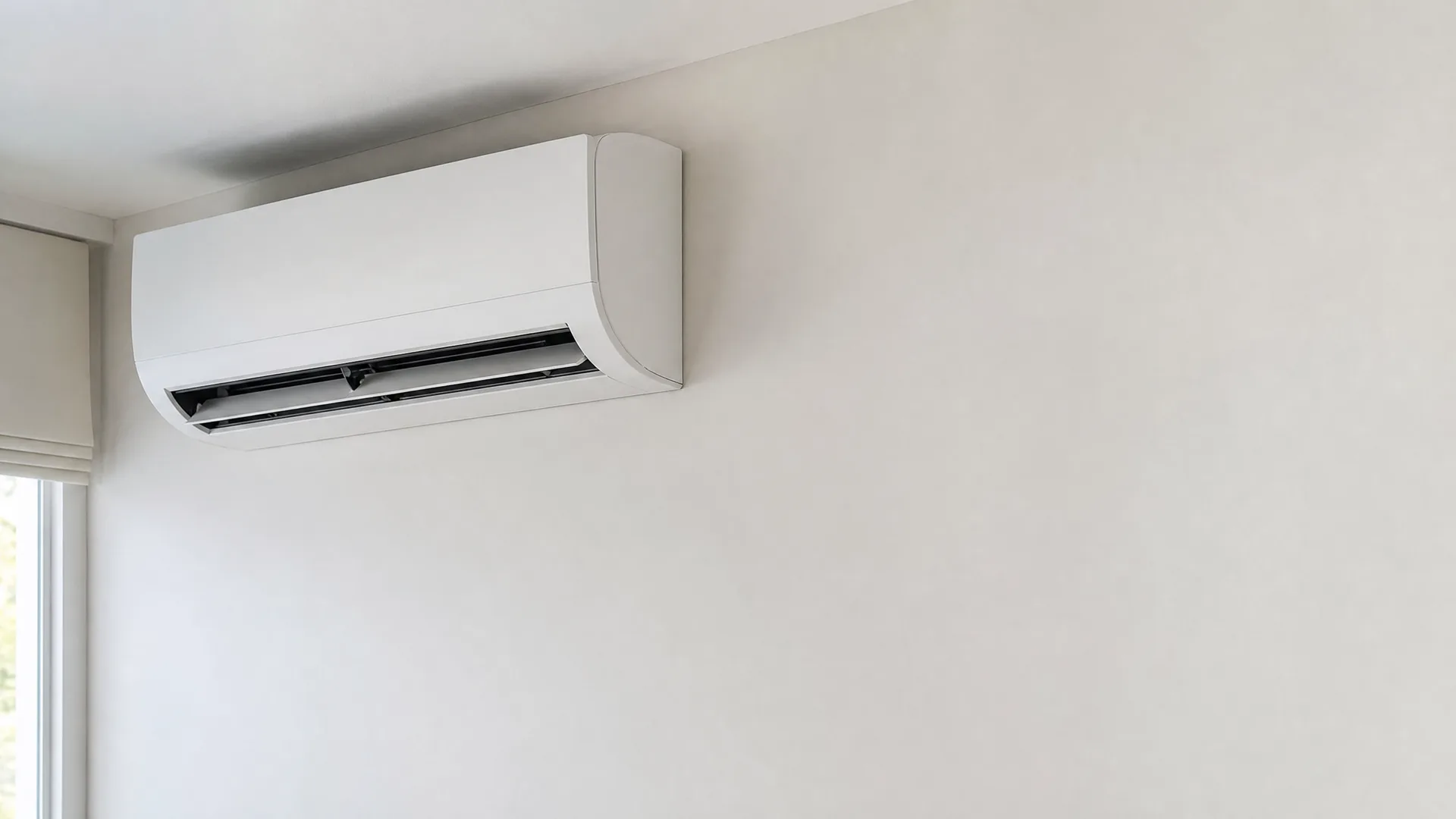
Why the filter matters here
The filter sits right in front of the evaporator coil and catches dust before it reaches those cold fins. When it's clogged, air has to push past it slower, and the coil can't shed its moisture the way it should between cycles. That wet coil sitting still is exactly where mold takes hold. Washing or swapping the filter every few weeks during a Jackson summer keeps air moving across the coil and gives it a chance to dry out.
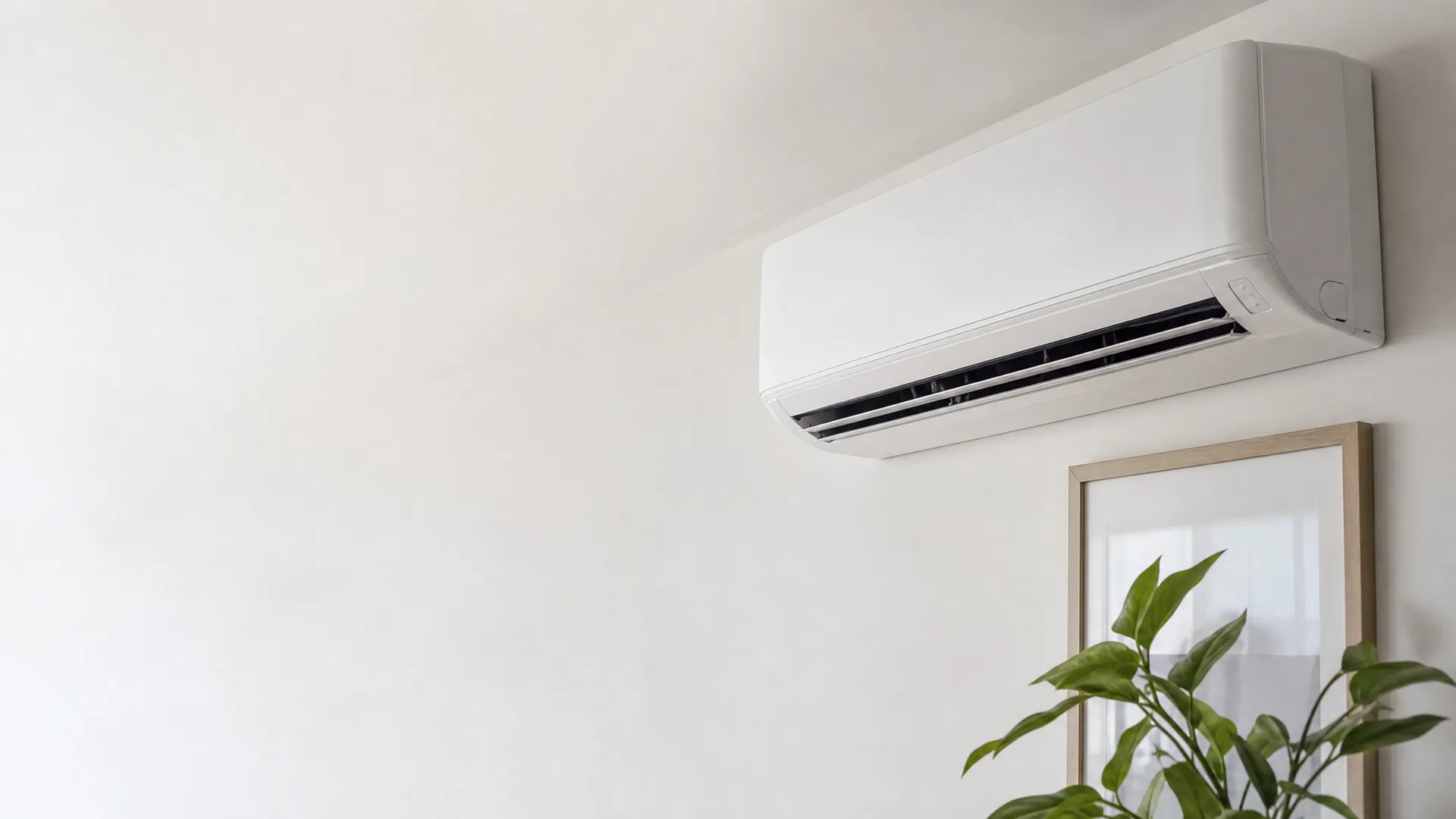
What a blower adds beyond cooling
Most mini splits keep the indoor blower running a few minutes after the compressor shuts off. That short run helps dry the coil before the unit goes idle. If that fan cycle gets disabled, or a remote setting cuts power to the unit the instant it reaches temperature, the coil stays wet between cycles. Over a long Jackson summer, that adds up to a lot of standing moisture and gives mildew far more time to settle in than it would otherwise get.
Why does a mini split in Jackson need this much upkeep against mold?
Cooling runs May through October
Cooling runs May through October, so the coil stays wet and working for six months straight before it ever gets a real rest.
Heat runs November through March
Heat runs November through March, which means the unit sits idle with leftover moisture inside for long stretches between cooling runs.
Power here costs 13.91 cents per kilowatt-hour
Power here costs 13.91 cents per kilowatt-hour, close to typical, so a dirty coil working harder to cool doesn't hit you as hard as it would elsewhere.
NOAA nClimDiv 1991-2020 · EIA-861 2025
Clean the filter yourself
You can pull the filter out, rinse it under the tap, and let it dry before sliding it back in. Most mini splits make this easy since the filter sits right behind the front cover with no tools needed. Doing this every few weeks during the summer keeps dust off the coil and lets the unit drain the way it's supposed to. What you can't do yourself is get behind the coil or down into the drain line. If the musty smell is already there, a dirty filter probably isn't the only cause, and rinsing it won't clear whatever is growing further back in the unit.
Have the coil and drain checked
A contractor who works on mini splits can pull the cover, look at the coil itself, and see whether the drain pan is holding water or draining clean. If the line set runs through a wall or attic space, a local contractor will know the layouts common to houses around Jackson and where these lines tend to clog. This matters because the same contractor handles the visit start to finish, rather than a call center routing you to whoever's free. Someone who services this equipment all summer knows which part of the system usually causes the smell and checks that first instead of guessing.





Get matched with a mini split pro in Hinds County
The pro who gets in touch is licensed in Mississippi and works in Hinds County.
Your mini split tune-up request goes to a pro who covers Hinds County.
There's no charge for the request.
Rinse It Yourself or Call a Contractor
Rinse the coil yourself
- A coil cleaner spray made for mini splits can cut through light mildew buildup on the fins without taking the unit apart.
- You still need to pull the front cover and filter first, since spraying through a dirty filter just pushes grime onto the coil.
- This only reaches what you can see and spray directly, so mold deeper in the coil or down in the drain line stays put.
- Doing this once before summer and again partway through the season keeps the smell from building up between visits.
- If the musty smell keeps coming back within a few weeks, the spray is only treating the surface, not whatever is causing it.
Have a contractor clean it
- A contractor can pull the blower housing and get behind the coil, where a spray bottle and a flashlight can't reach.
- They can flush the condensate line itself, not just wipe down what's visible, which is usually where standing water sits.
- A local contractor who works on mini splits all summer in Jackson has seen which units in this area clog first and why.
- Going through one licensed contractor means one visit and one assessment, not several companies competing for the same job.
- They can check the drain pan's slope and the line's path for the kind of standing water a rinse alone won't fix.
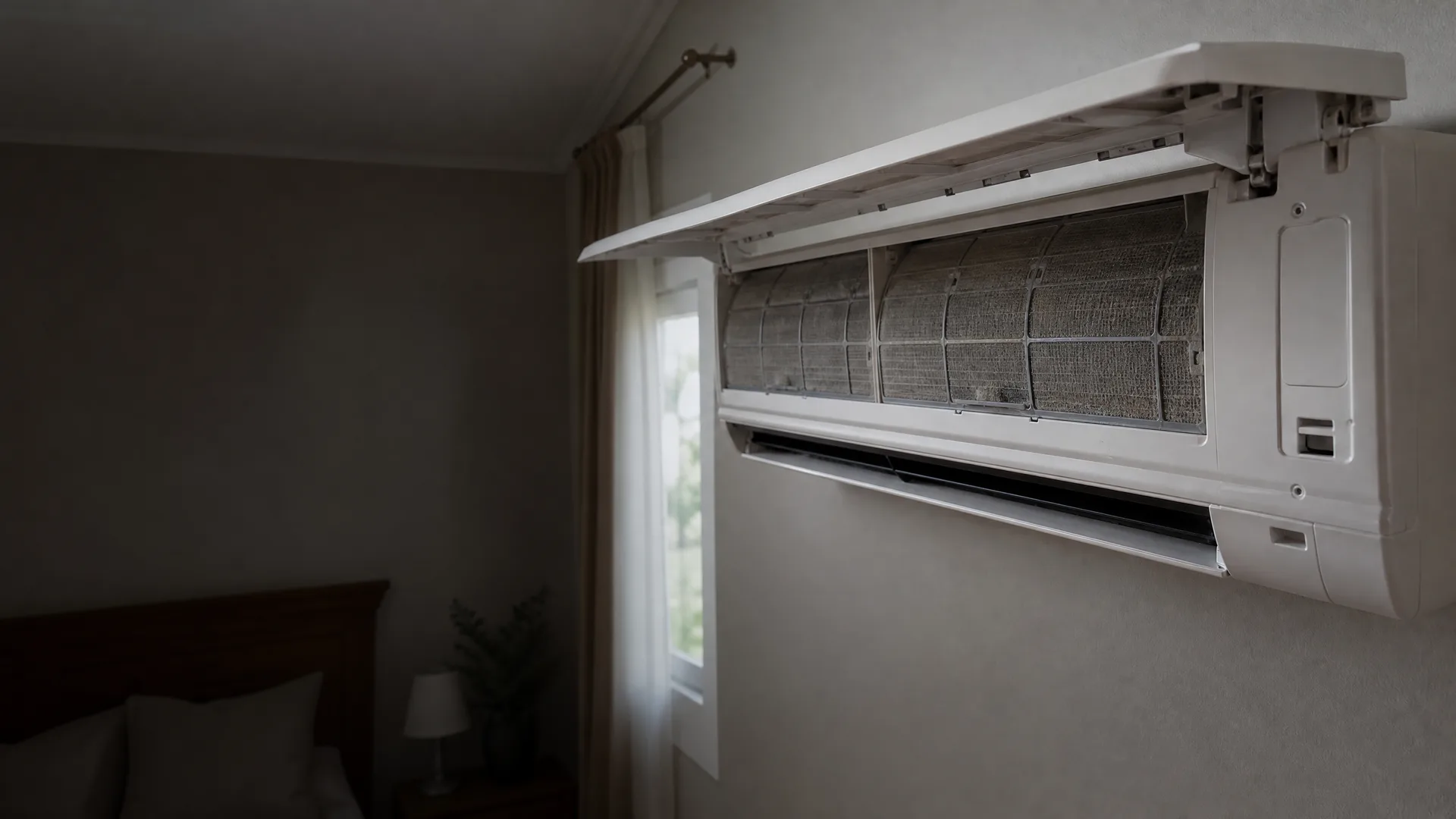
You pull the front cover off the bedroom unit on a warm April afternoon, light coming in low through the blinds. The filter screen slides out gray with dust, heavier in your hand than you expected. Behind it the coil looks damp, a little dull, and the smell is stronger now that the cover's open, the same musty smell that's been drifting into the room at night. You turn the filter over under the window light, looking for where the dust sits thickest, and decide it's done for the season. Outside, Jackson is already warming toward the kind of summer that'll keep this unit running for months.
Why does my mini split smell musty when I first turn it on?
You turn the mini split on after it's sat off for a while, maybe overnight or after a stretch of mild weather, and that first blast of air carries a musty smell that fades after a few minutes. It only seems to happen at startup, which makes it feel different from a smell that lingers the whole time the unit runs.
That first blast is pulling air across a coil that sat damp and still
While the unit is off, the evaporator coil stays wet from the last cycle, and with no airflow moving across it, that moisture just sits there. Mold and mildew growing on the coil or in the drain pan release their smell into the still air inside the unit. The moment the blower kicks on, it pushes that trapped, musty air straight into the room before fresher air takes over. That's why the smell shows up strong at startup and fades once the unit has been running a few minutes. If it never fully clears, or comes back every time the unit cycles off and on, the mold growth is heavier than a quick airing out can handle.

A National Weather Service dew point average for Hinds County puts summer air here at 70°F through June, July and August. At that level the air feels wet even standing still, and your mini split has to pull a lot of water out of it just to keep the room comfortable. That's more condensation running off the coil, more water moving through the drain pan and line, day after day, for three months straight. A unit sized fine for a drier climate ends up working against that moisture load all summer, and the parts that handle the water, the pan, the line, the coil fins, stay wet longer between cycles than they would somewhere less humid. That's the condition mold needs, and it's sitting right there in your indoor unit.
NASA POWER T2MDEW

A musty mini split is a drainage problem, not a mystery
The smell means water is sitting somewhere it shouldn't, on the coil, in the drain pan, or in the condensate line. Hinds County summers keep that coil wet for months at a time, so a clogged filter or a slow drain turns into mold faster here than it would somewhere drier. Clean filters and a clear line keep the unit doing what it's built to do. Skip that, and the smell comes back no matter how many times you rinse the coil.
A contractor who works on mini splits all summer in this area has seen which units clog first and why, often the same models, the same drain line routing, the same filter habits. Getting matched with one local contractor means someone looks at your specific unit instead of guessing from a list of common causes. You'll hear from them directly, and you'll know going in that it's one contractor looking at your situation, not a handful of companies working off the same lead.


Mini Split Maintenance
Find a mini split maintenance pro in Hinds County

- Get matched with someone who does this kind of work in Hinds County.
- Get matched with a pro who does mini split tune-ups in Hinds County.

- Send the form, and lining up the mini split tune-up stops being yours to chase.
- Send it once and finding someone is no longer on you.

- One form instead of hunting for a pro who does mini split tune-ups.
- Fill out one form instead of calling around for a mini split tune-up.

- A licensed local pro takes the request for your mini split tune-up.
- Your request goes to one pro, not a list of companies.