
Once a year
A contractor opens the unit, cleans the coil and blower wheel, and checks the drain line before the next stretch of muggy months sets in.
One form instead of hunting for a pro who does mini split tune-ups.
Skip the searchClean the filters on your mini split every two to four weeks and have the coils and blower wheel cleaned by a contractor once a year. The filters catch dust and lint right away, and with the humidity Gulfport holds most of the year, a dirty filter grows mold fast and blocks airflow across the coil. Once that coil gets coated, the unit works harder to pull the same heat out of the air, and the indoor blower wheel can build up a layer of grime that cuts airflow even with a clean filter. Running a mini split for cooling nearly year-round here means the system logs a lot more hours than one running a few months a year, so skipping the yearly cleaning shows up sooner. A wall unit that's never had the coil cleaned will start short cycling or blowing weaker air, and by then the inside is harder to get at and clean properly.
Cooling runs May through October
Six months of cooling means six months of dust and moisture pulling through that filter, so skipping a month shows up fast as mold or a weaker airflow.
Heat runs November through March
Five months of heat still pushes air across the same coils and filter, so the unit never really gets an off season to coast through unused.
Power here costs 14.63 cents per kilowatt-hour
At 14.63 cents per kilowatt-hour, a unit working harder because of a dirty coil or blower wheel adds up on the bill month after month.
NOAA nClimDiv 1991-2020 · EIA-861 2025
Clean the filters yourself and the coil stays dry, the blower wheel stays balanced, and the unit pulls humidity out of the air the way it's supposed to. A clean filter is a five-minute job you can do on a Saturday.
Skip it through a few muggy summers and the coil cakes up, the blower wheel loses airflow, and the unit runs longer to do less. A contractor who works on these year round can clear that buildup and tell you if anything else is wearing out underneath it.




A contractor opens the unit, cleans the coil and blower wheel, and checks the drain line before the next stretch of muggy months sets in.
Someone who services mini splits all over Harrison County already knows what the salt air and humidity here tend to do to a coil.
That smell when the unit first starts is usually mold or mildew sitting on a dirty filter or coil. You might also notice the air feels damp even with the unit running, or water marks on the wall below the indoor unit where the drain line has started to back up. Some rooms blow cooler than others, or the whole house takes longer to feel comfortable than it used to. A film of dust on the louvers is normal between cleanings, but a gray or black coating means it's overdue. Left alone through a few summers, the coil can grow mold that spreads into the air every time the fan turns on, and the extra strain on the blower wheel can shorten how long the unit lasts.

This is what a mini split looks like when the filter gets washed every few weeks. Air moves freely across the coil behind it, so the unit pulls moisture out of the room instead of just pushing cold air past it. No film on the housing, no smell when it kicks on.

Dust builds up on top first, then works into the vents as dark residue. That buildup blocks airflow across the coil, so the unit works harder and moves less moisture out of the air. In Gulfport's humidity, this is usually what's growing underneath it.



A licensed pro who works in Harrison County gets your request.
Skip calling around to set up a mini split tune-up.
It costs nothing to send, and you don't have to hire anyone.

Behind the filter sits the evaporator coil, and that's where a contractor's visit earns its keep. They flush it with a coil cleaner that lifts the film the filter never catches, then spin up the blower wheel and check it for the same buildup, because a blower wheel caked with dust throws air out of balance and makes the unit work harder to move the same amount of air. The drain line gets checked too, since a clogged one backs up and drips down the wall instead of outside. Refrigerant level gets a check on most visits, since a system low on charge won't pull humidity out of the air no matter how clean the coil is.
Finding someone who does this right means knowing what to ask and whose number to call, then doing it again next year if that contractor doesn't answer. A contractor who services mini splits across Harrison County every season already carries the right coil cleaner and knows which drain lines clog first in this climate. One call gets you that, instead of a search each spring for someone new.

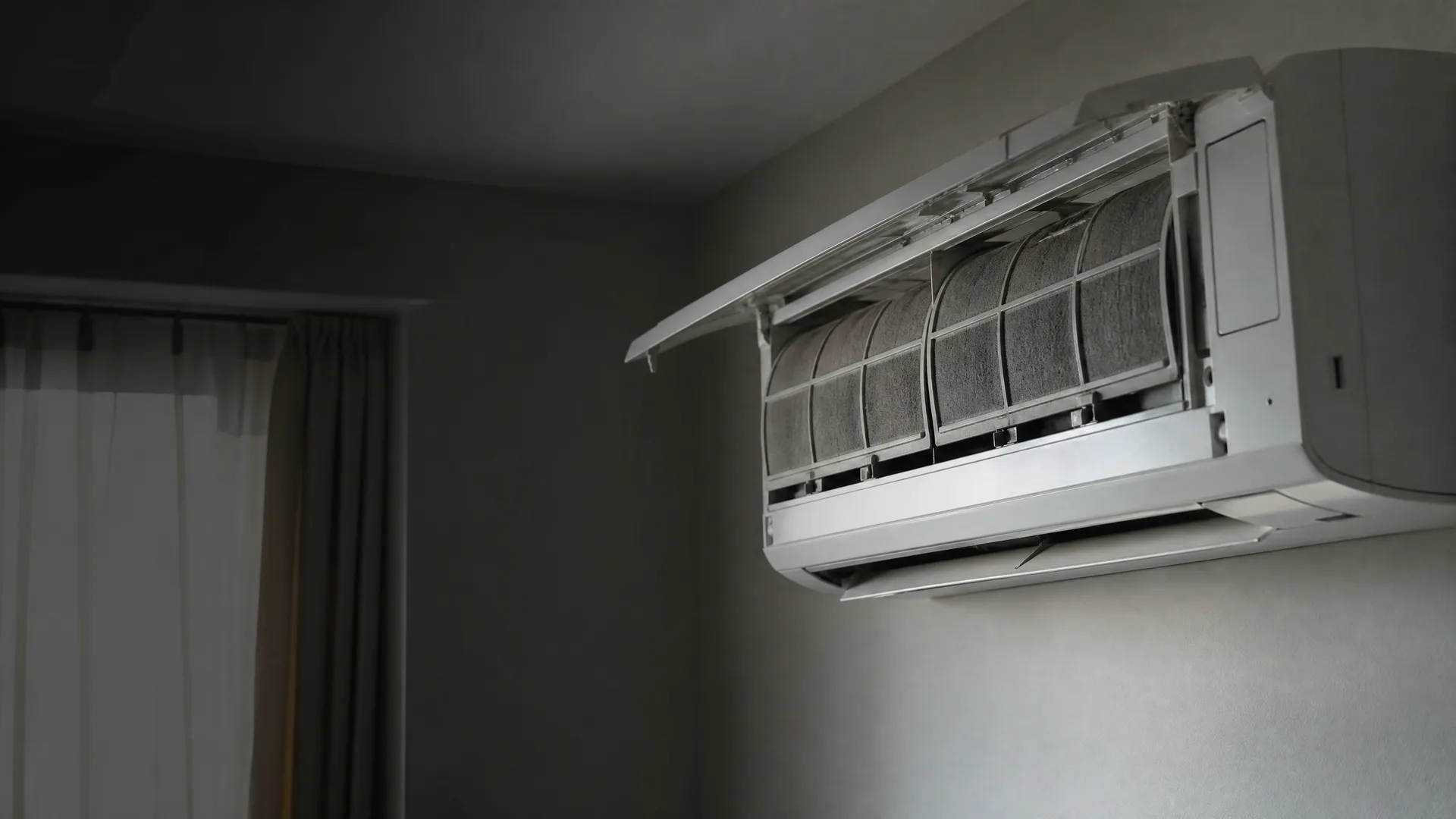
The window's open a crack to let the morning in, still cool enough in April to do that. You've pulled the front cover off the indoor unit to wipe it down before the heat really sets in, and the filter screen is sitting there grey with dust, a few months built up since you last looked. You hold it up to the light from the window and can't see through half of it. The bedroom's been running fine, no smell yet, no trouble, but you know Gulfport summers don't leave much room for catching up once they start. You carry the screen to the sink to rinse it clean before you set it back in.


The answer is simple even if the reasons take longer to explain. Wash the filters every two to four weeks. Get a contractor out once a year for the coil and blower wheel. That's the whole schedule, and Gulfport's stretch of hot, humid months is exactly why it can't slip. A filter left too long stops catching what it should, and the moisture sitting in that air finds somewhere to go, usually the coil behind it. That's where the musty smell comes from when the unit kicks on, and it's also where a filter cleaning alone won't reach. A contractor opens the unit, flushes the coil, checks the blower wheel for the film that builds up over a season, and looks at the drain line before the next muggy stretch starts. Someone who works on mini splits throughout Harrison County has already seen what salt air and humidity do to these units over time, so there's no explaining the climate or guessing at the cause. Finding that person is the part this page handles. One contractor, licensed and local, comes to look at your unit instead of a round of calls and quotes. Keep the filter clean and get the yearly visit, and the unit keeps doing the job it's built for, pulling the moisture out of the air instead of just blowing cold air past it.


Describe it once
A licensed local pro takes the request for your mini split tune-up.
