





Does a mini split lower heating bills in Mississippi

Step 1 of 3: Equipment

A mini split usually lowers heating bills here, because most homes in Mississippi heat with electric resistance heat or an older electric furnace, and a mini split moves heat instead of generating it with resistance coils. That makes it two to three times more efficient per unit of electricity for most of the winter. Mississippi winters are mild enough that a mini split can carry the heating load without leaning on backup resistance heat, which is where the savings disappear on colder systems. Power here runs at a typical rate, so the savings come from using less of it, not from a cheaper rate. How much you save depends on what you're replacing. Swapping out baseboard heaters or an old electric furnace shows the biggest drop. If you're replacing a newer heat pump, the difference is smaller. Either way, installation matters: a mini split sized and placed wrong for the room won't deliver the efficiency it's rated for.

A gray-haired bearded man in a dark coat and scarf dusted with snow stands smiling in a dimly lit entryway with a white front door, a side table with a lit lamp, an oval mirror, and a patterned rug.
An older bearded man in a dark snow-dusted coat and gray scarf stands just inside a dimly lit home entry, with a framed picture, lit table lamp, and an adjoining room with a fireplace behind him, and snow visible through the open door.
A gray-haired, bearded man in a dark snow-dusted coat stands smiling in a dimly lit entry hall with a staircase, a lit table lamp, a framed picture, and a living room visible through a doorway.
An older man with gray hair and a beard, wearing a dark jacket dusted with snow, stands smiling in a dimly lit hallway with lamps and a living room visible behind him.

Why does your electric heat cost so much to run

If your house heats with baseboard heaters or an older electric furnace, you've probably noticed the bill climbs hard once the thermostat gets used through the winter. Resistance heat has to make every bit of warmth itself, and that pulls a lot of power. You might feel it in rooms that still run cold despite the heat staying on, or in a system that seems to run constantly once it gets into the 30s and 40s. None of that means anything is broken. It just means the heat is working the hardest way there is to work. Left alone, that's not a risk to the house, just to what you're paying every month to stay warm.

A white wall-mounted mini-split air conditioner installed near the ceiling on a plain beige interior wall.

Mini split running right

A mini split that is sized and installed correctly heats a room without strain. You will not hear it labor, and the room reaches temperature and holds it. Set it and the bill reflects what a heat pump should cost against straight electric resistance.


A dusty, discolored wall-mounted mini-split air conditioner unit near the ceiling of a plain beige interior wall.

Mini split past its years

A casing gone yellow and caked with dust usually means the coils behind it are just as dirty, inside and out. A unit working that hard to move the same heat pulls more power to do it, and the savings over electric resistance shrink or disappear.

How does a mini split actually move heat instead of making it

You keep hearing that a mini split "moves" heat rather than making it, but that's just a phrase until you know what it means. Your baseboard heaters and your old electric furnace both work by forcing electricity through resistance coils, the same way a toaster does. A mini split doesn't have coils like that, so it's fair to wonder what's actually happening inside the unit on your wall or outside your house when it's 35 degrees out.

It pulls heat out of the outdoor air and pumps it inside

The outdoor unit has a coil filled with refrigerant that runs colder than the outside air, even on a cold day, so heat still flows into it. A compressor squeezes that refrigerant, which raises its temperature well above room level, and that hot refrigerant travels inside to the indoor head, where a fan blows your room's air across it. The refrigerant then cycles back outside to pick up more heat and repeat the process. None of that electricity goes toward generating heat directly. It goes toward moving refrigerant through the loop and running the compressor, which is why a mini split pulls several times more heat into your house than the electricity it uses would produce on its own.

A white wall-mounted mini-split air conditioner installed high on a beige interior wall near the ceiling molding, with a light curtain and curtain rod at the left edge.

Running the way it should

This is a mini split doing its job. The unit sits near the ceiling, quiet, pulling heat from the outside air and putting it into the room. At this age the casing is still clean and the coil inside isn't fighting dust. It holds the room at temperature without running longer than it needs to, and that's what keeps the electric bill down against straight resistance heat.

A wall-mounted mini-split air conditioner indoor unit with a discolored cream plastic casing and dusty outlet vanes, installed high on a plain light-colored interior wall near the ceiling.

Running into trouble

The yellowed casing and the dust built up on the vents tell you this unit has gone a long time without a filter cleaning or a coil check. A dirty coil can't pull heat from the air as well, so it runs longer to do the same job. At that point it's still cheaper than baseboard heat, but not by as much as it should be.

A woman wrapped in a thick beige fleece blanket sits on a sofa with an open book on her lap, beside a lit table lamp, with a frost-covered window behind her.
An older woman with gray hair in a bun and glasses, wearing a beige knit sweater, smiles while looking to the side in a warmly lit kitchen, with a loaf of bread on the counter in the foreground and a snowy scene outside the window.

The right pro for this job

One form replaces the calls you'd make to find a mini split pro.

No charge to send it. You decide if you hire them.

A mini split with a resistance heat strip still beats a furnace or baseboard heat on its own, because the strip only kicks in when the outdoor air gets too cold for the heat pump to pull enough warmth from it.

Most winter nights in Mississippi do not get cold enough for that to happen often. The mini split runs as a heat pump most of the time, and the strip stays off.

A dusty white wall-mounted mini-split air conditioner installed high on a beige interior wall below a molded ceiling trim.
Before you get your mini split installation
A white wall-mounted mini-split air conditioner unit installed high on a light gray interior wall near the ceiling, with a white-framed window and green foliage visible at the left edge.
After you get your mini split installation

Mild January night in the 40s

A heat pump mini split pulls warmth out of air that's still well above zero, and it does that easily. On a night like this, it covers the room on its own, no backup heat needed. This is most winter nights in Mississippi, so most of the time the mini split is doing all the work and your bill shows it. The compressor runs steady, not hard, and the unit keeps the room at temperature without the resistance coils ever switching on.

Rare hard freeze night

When the outdoor air drops into the 20s or lower, a heat pump has less heat to pull from, so it works harder and moves less of it per hour. If your unit has a backup strip, that's when it kicks in to make up the difference, and for those hours you're paying for resistance heat again. These nights are the exception here, not the rule. A mini split sized right for your home still comes out ahead over the whole winter, because the strip only runs on the handful of nights that call for it.

Power costs 14.03 cents per kilowatt-hour statewide

At 14.03 cents per kilowatt-hour, every unit of heat your mini split moves instead of makes is money back in your pocket. Run the same heat off baseboard or an old electric furnace and you are paying that rate for every bit of warmth created from scratch, not just moved.

EIA-861 2025 statewide residential average

A white wall-mounted mini-split air conditioner installed near the ceiling on a light-colored interior wall, with a window and green foliage visible at the left edge.
A clean mini split pulls heat from outside air with little effort, which is why it costs less to run than the resistance heat it replaced.
A dusty white wall-mounted mini-split air conditioner indoor unit installed high on a beige interior wall below a white ceiling and trim.
Dust packed into the vents and intake grille makes the unit work harder for the same heat, so the savings shrink.
A single-story red brick ranch house with a gray shingled roof, white-framed windows and a central dark front door, fronted by a wide asphalt driveway, green lawn and large deciduous trees on both sides under a bright hazy sky.

That electric bill isn't only about winter. Summer humidity here runs a dew point of 70°F through June, July and August, according to NOAA climate data, which is the thick, sticky kind of air that sits on you outside. Your mini split has to wring that moisture out of the air before it can cool the room, and that work shows up on the summer side of the bill. A unit that's clean and sized right handles it without strain. One that's clogged or undersized runs longer and pulls more power just to get the room feeling dry.

NASA POWER T2MDEW county cells weighted by homes

A smiling man in a denim shirt and white t-shirt stands in an open dark doorway of a stucco house, facing a woman with long brown hair and a green jacket seen from behind in the foreground.

So yes, it lowers your heating bill

A mini split that's sized right and running clean will cost you less than baseboard heat or an old electric furnace, month after month, because it moves heat instead of making it from scratch. That's the whole answer. Mississippi winters rarely ask the unit to do more than it can handle, and most nights it covers the room without leaning on backup heat at all.

Where it goes from here depends on your house, your unit, and how it was put in. If you're not sure yours is sized or installed the way it should be, that's worth a second look from someone who can actually see it. You can be matched with a contractor who takes on jobs like yours, and they'll reach out to you directly, no need to spend an afternoon calling around and repeating the same story to five different companies.

A gray upholstered sofa with a matching cushion sits beside a potted plant and a wooden table holding a small green plant in a stone pot, near a curtained window.
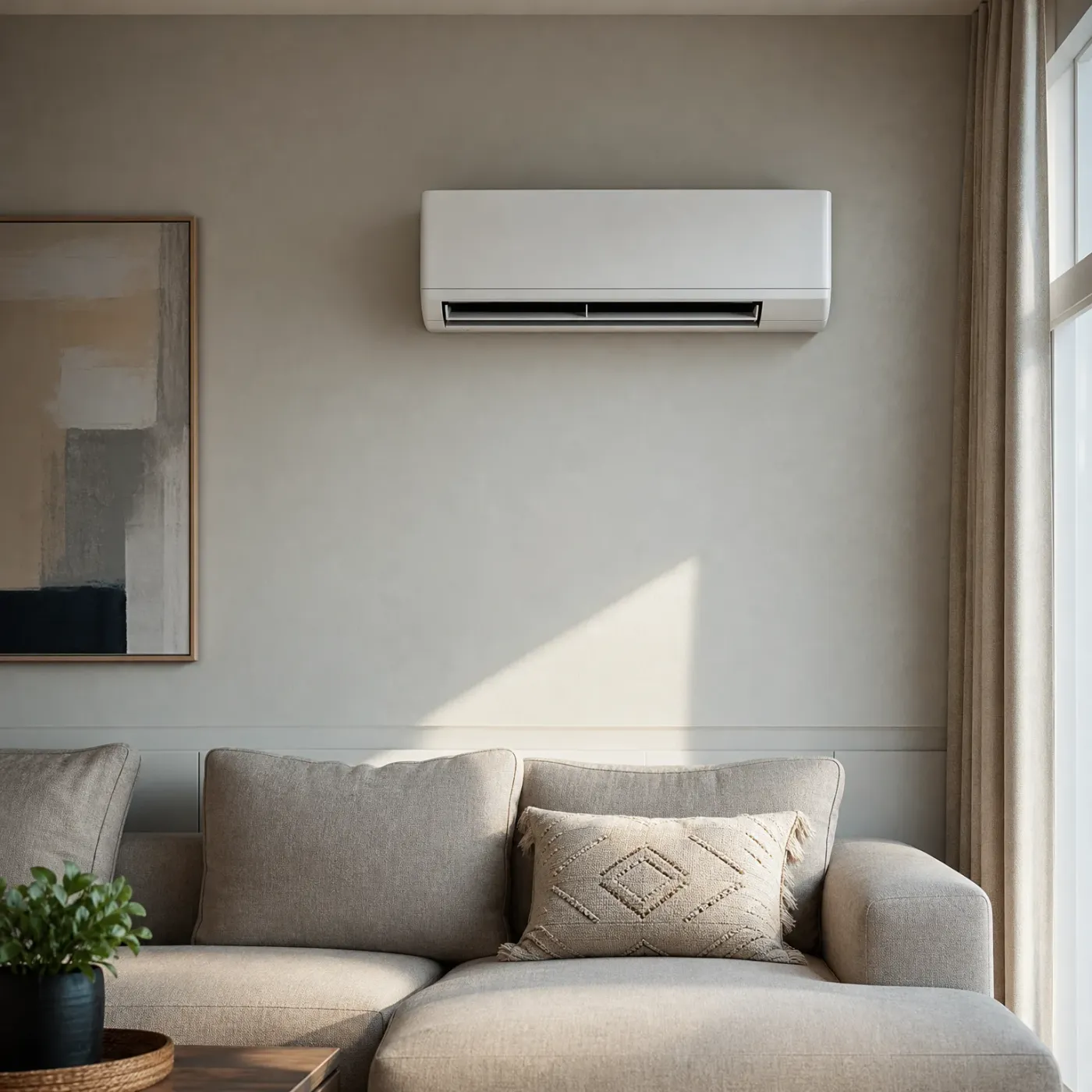
A white wall-mounted mini-split indoor unit on a light gray wall above a beige sectional sofa with a patterned cushion, beside a framed abstract artwork and a curtained window.

Matched to your mini split job

Get my match

Skip the round of in-home estimates for a new mini split.

There's no charge for the request.