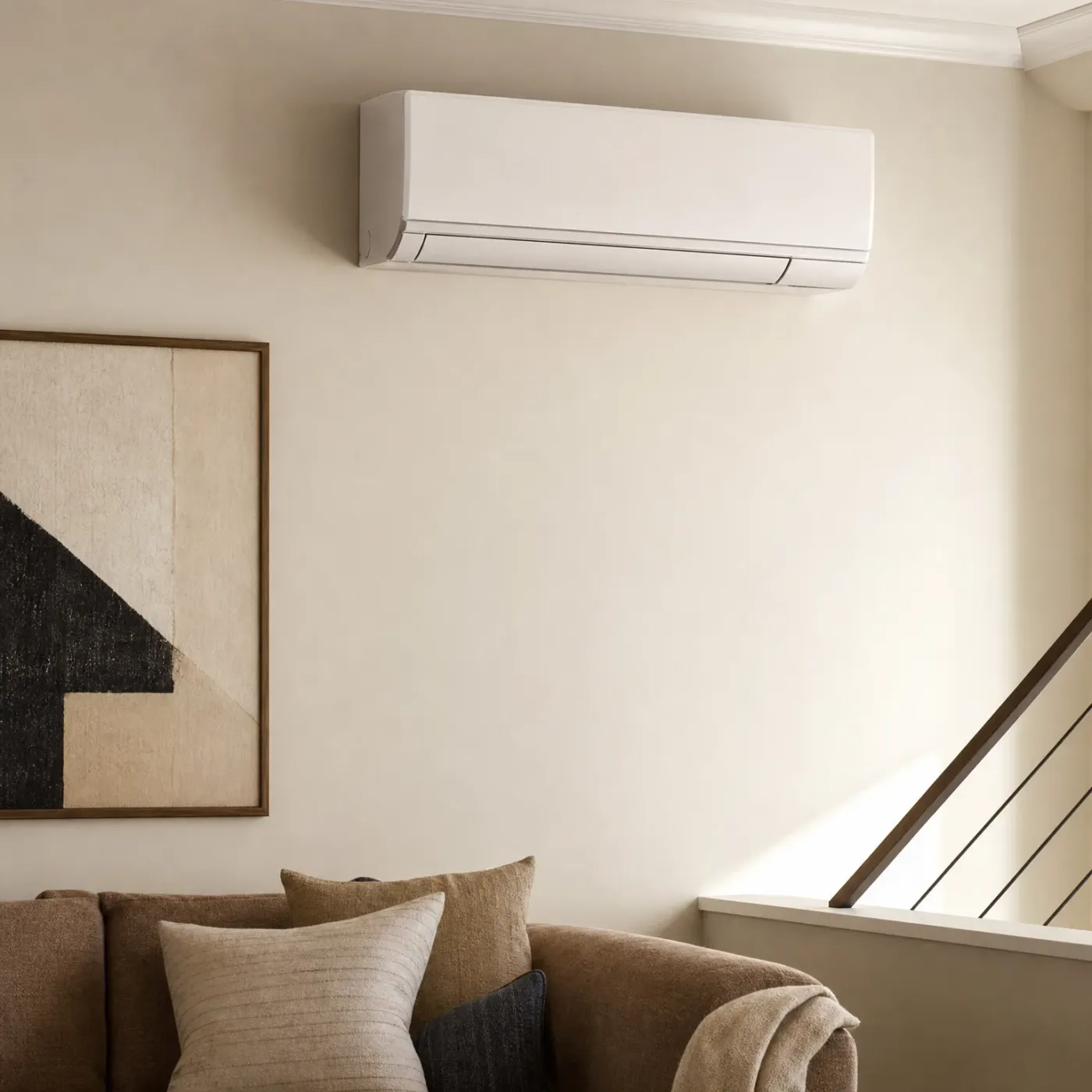

A clean unit keeps its promise
When the coil and filter are clear, the unit pulls heat from the outside air and moves it into the room without a fight. You set 68, and the room gets there and stays there.

Mississippi winters don't stay cold for long, but on the nights that dip into the 30s, you want your mini split actually keeping up instead of running nonstop and still leaving the house feeling off. You're not trying to overthink the thermostat, just land on a number that keeps you comfortable without the unit straining every time a cold front comes through.
Most homeowners in Mississippi land between 68 and 70 degrees and stay comfortable through the coldest stretches of winter. A mini split heats by moving warmth from the outside air rather than burning fuel for it, so the lower the number you need, the harder the outdoor unit has to work to pull heat out of cold air. Since winters here rarely hold at freezing for long, 68 to 70 keeps the unit running efficiently instead of pushing it toward its limit on the handful of nights that drop into the 30s. Going much higher than 70 doesn't make the house warm up faster. It just asks the compressor to work harder than it needs to, and that extra strain is the kind of thing that catches up with the system over a season.
The thermostat calls for heat when room temperature drops below setpoint.
The reversing valve switches the refrigerant flow to heating mode.
The outdoor unit pulls heat from the outside air into the refrigerant.
The compressor raises the refrigerant's temperature before it reaches the indoor coil.




Most of this comes down to noticing what your house is actually doing. A mini split that short cycles all night is working harder than it should, and that adds up over a winter. Dropping the temperature way down during a cold snap to save a little power usually costs you more once the unit has to claw its way back up. If one room never quite gets comfortable while the rest of the house does, that's not a setting problem, that's the equipment in that zone needing a look. Same with a unit that runs and runs on a cold night but never reaches the number you set. A little frost on the outdoor unit during a cold stretch is normal, but if it's still there after the unit's defrost cycle runs, that's worth a call. None of this is about finding the perfect number on the thermostat. It's about catching the small things, a dirty coil, a refrigerant leak, before a cold snap turns them into a night without heat. Maintenance before winter starts is what keeps those small things small.


A licensed local pro takes the request for your mini split tune-up.
No fee to send it, and nothing to sign.
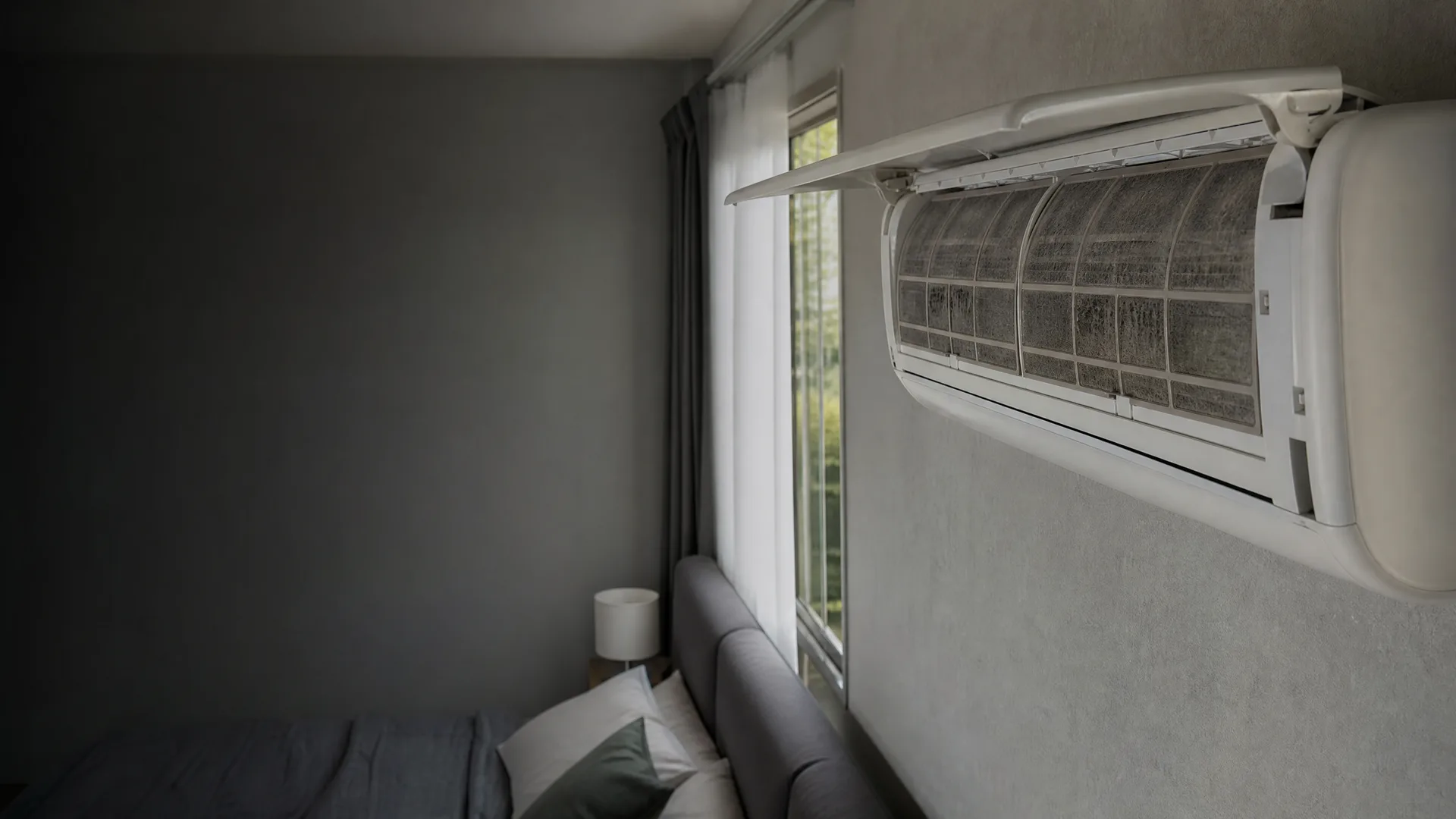
You pull the cover up on a Tuesday afternoon in April, sunlight coming in flat across the bedroom carpet. The filter screen underneath is grey with a winter's worth of dust, the kind that built up through all those nights you had the heat running steady against a cold snap. You hadn't thought to check it since November. Now, with the cold behind you and the mini split about to switch over to cooling for the muggy months ahead, you want it clear before the unit starts working the other direction. You run a thumb across the mesh and the dust comes away in a soft grey smear, leaving a clean line where you touched it.
You'll notice it on the nights that dip into the 30s. The unit keeps running, you can hear the outdoor fan, but the room never quite catches up to the number on the thermostat. Air coming out of the indoor unit feels lukewarm instead of warm. Some rooms down the hall stay noticeably cooler than the one with the mini split. If it's been a while since anyone pulled the cover off and looked at the filter, that's usually part of it. A filter clogged with dust blocks the airflow the unit needs to move heat into the room, so it runs longer and still falls short. Left alone through another Mississippi winter, that strain adds up on the compressor, the part that costs the most to replace.

When the coil and filter are clear, the unit pulls heat from the outside air and moves it into the room without a fight. You set 68, and the room gets there and stays there.

Dust packed into the vents and the intake grille blocks airflow before it reaches the coil. The compressor runs longer to make up for it, and on a cold night it may not catch up at all.
At 14.03 cents per kilowatt-hour, running your mini split steady through a cold night costs about what it looks like on paper, nothing hidden in the rate. A unit kept clean and holding one setpoint uses that power to heat the room, not to fight a clogged coil.
EIA-861 2025 statewide residential average
Set it in the high 60s and leave it there. That's the whole answer. A mini split in good shape will hold that number through a Mississippi winter, even on the nights that drop into the 30s, without running itself ragged trying to catch up.
If yours isn't holding setpoint, the fix usually isn't the thermostat. It's the coil or the filter, and that's a maintenance visit, not a settings change. Someone who services these units all winter in your area has likely already seen what tends to go first on the model you have, because they've opened up a dozen others just like it this season. That's worth more than a company that handles everything from gutters to water heaters and gets to mini splits when it gets to them.
Send one request and one contractor calls, the one matched to your equipment and your area, not a string of companies bidding against each other for the job. You won't spend the evening fielding calls or explaining your system twice.
Once that part's handled, the rest is simple. Keep the coil and filter clean, hold your setpoint, and let the unit do what it's built to do. You already know what a cold night here feels like. This is just making sure the unit knows too.