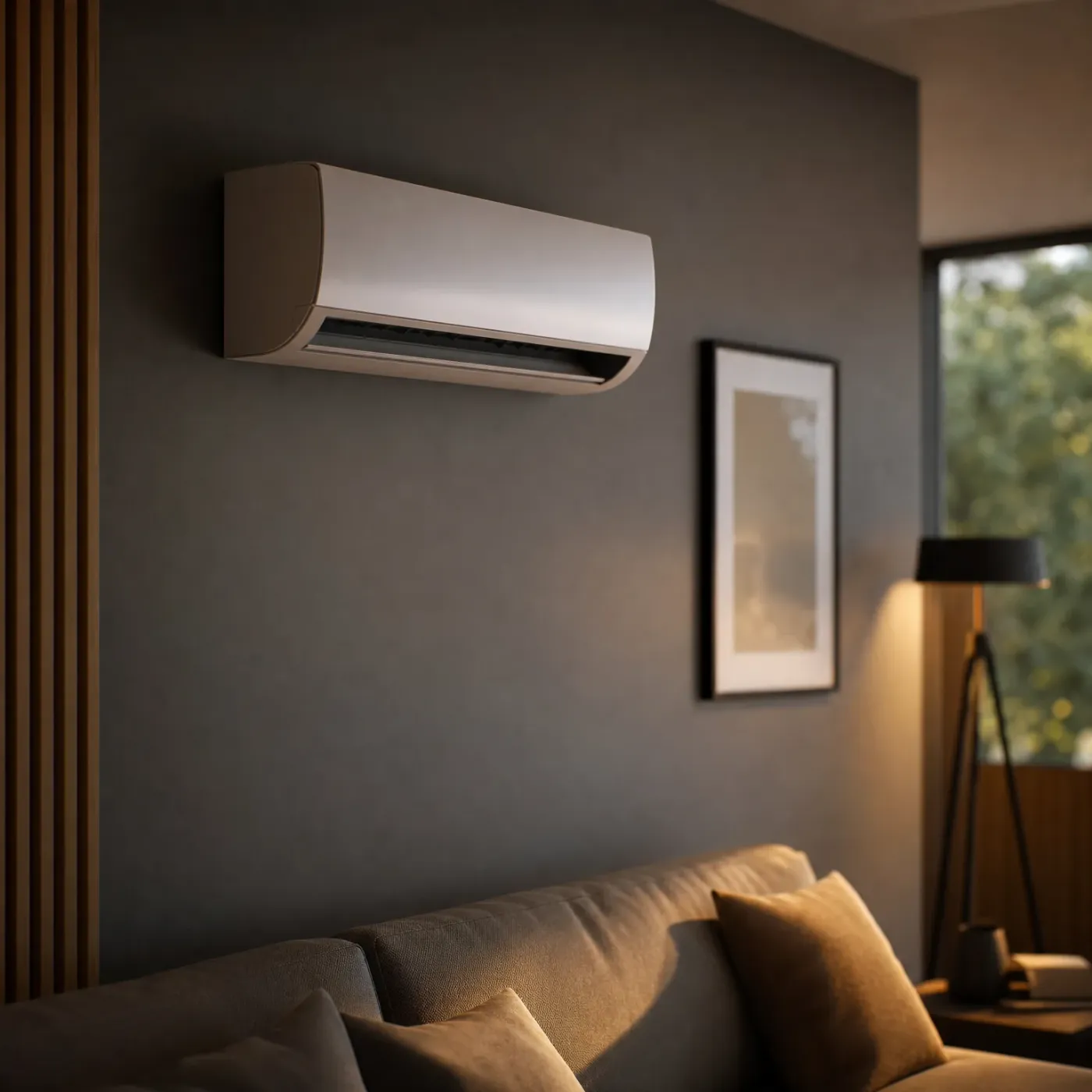



A white wall-mounted mini-split indoor unit on a gray interior wall above a beige sofa, with a framed picture, a floor lamp, wood slat wall trim, and a window showing green foliage.

Skip calling around

Adding a mini split to a Mississippi home with a furnace

Adding a mini split alongside a furnace raises real questions: where it should go, how it works with the ductwork you already have, and whether your electrical panel can handle it. Instead of calling around to different HVAC companies and explaining your setup each time, you're matched with one licensed Mississippi contractor who installs these year round and knows how they pair with a furnace.

Skip the calls

A mini split works fine alongside a furnace, and most homes in Mississippi that add one keep the furnace in place rather than replace it. The mini split handles a single room or zone on its own thermostat, while the furnace still covers the rest of the house. They don't share ductwork, which is why this pairing works: the mini split runs on its own line set to an outdoor unit, no connection to the furnace's supply trunk or return. For most homes here, the mini split ends up doing the summer cooling in whatever room it's installed, since Mississippi summers are hard on a single window unit or an undersized central system, and the furnace keeps doing what it already does in winter. Where it gets installed depends on the room: an exterior wall for the line set, enough clearance for the indoor head, and a spot outside for the condenser. The furnace doesn't need to change at all.

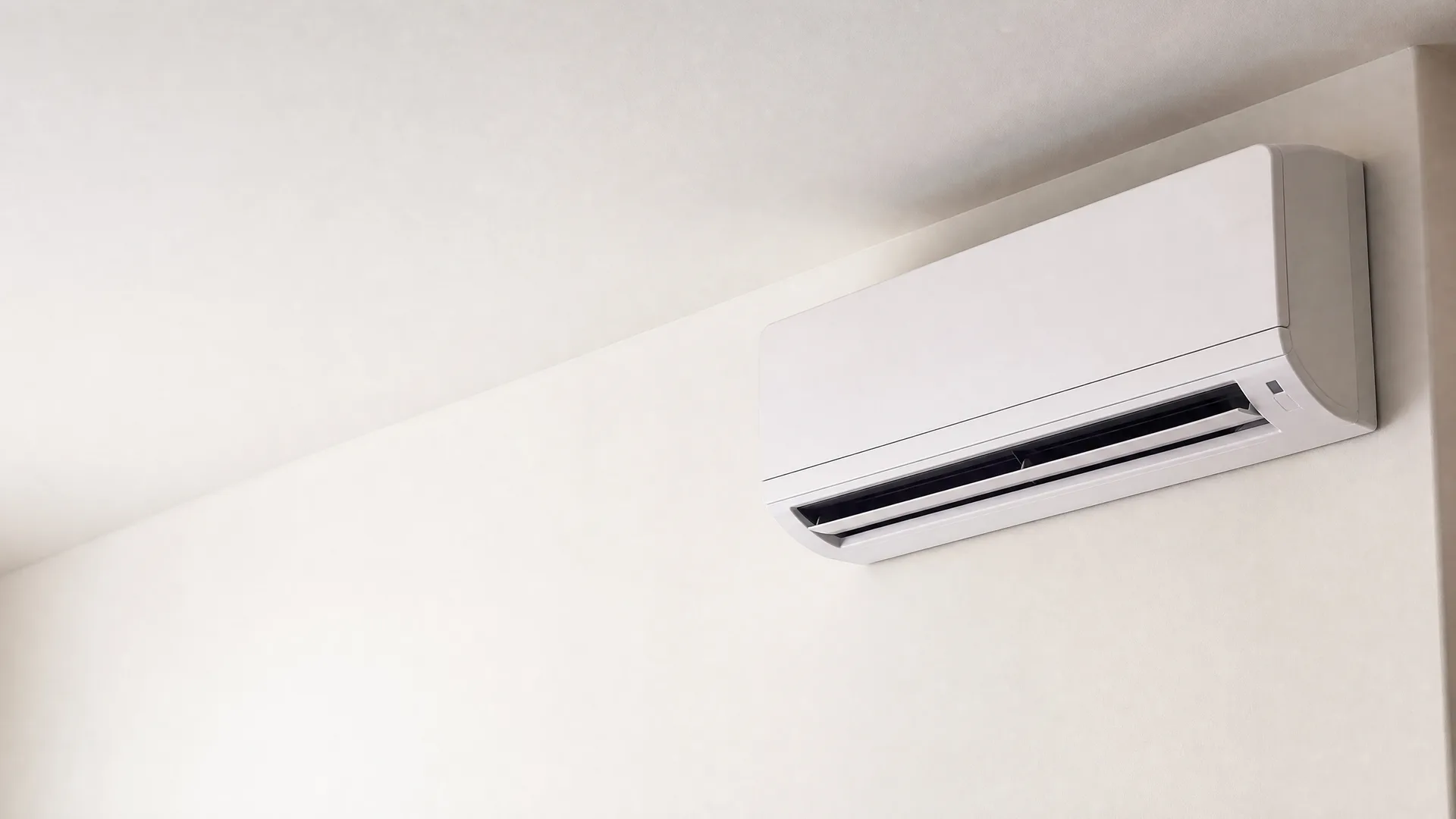
A dusty, discolored wall-mounted mini-split air conditioner indoor unit on a plain white wall, with its horizontal louvers and vent grille visible.
Before you get your mini split installation
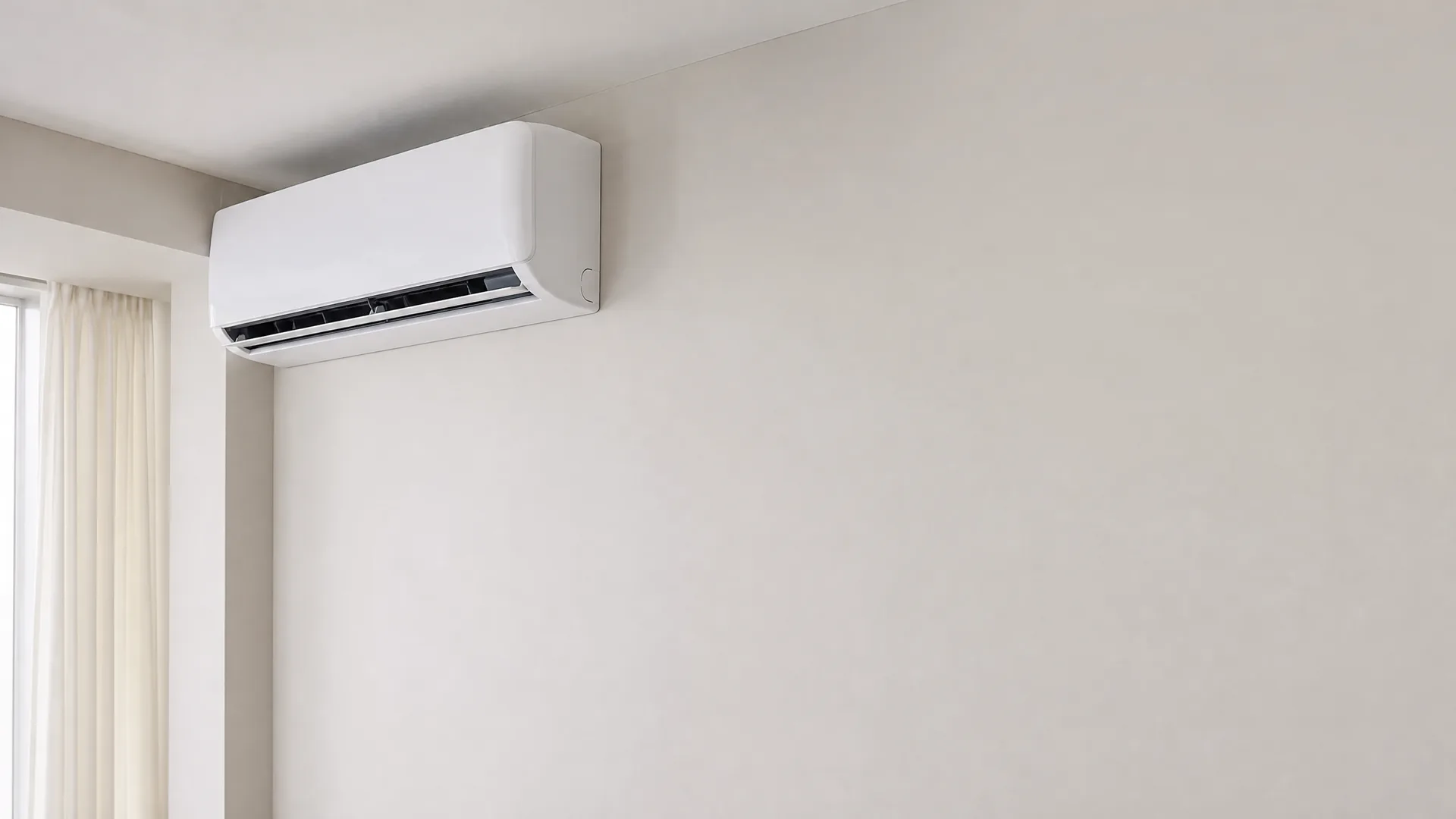
A white wall-mounted mini-split air conditioner on a beige interior wall, next to a window with sheer white curtains and green foliage outside.
After you get your mini split installation
A white wall-mounted mini-split indoor unit installed high on a gray interior wall, with a sofa, dark table and window visible in an adjoining room to the right.

Running clean

A mini split that's sized and installed right sits flush against the wall, louvers clean, pulling the muggy air down to where you want it. The room it's zoned to stays steady on its own thermostat, no fighting with the rest of the house.


A wall-mounted mini-split air conditioner indoor unit with a dusty beige casing and dark louvered vent, installed near the ceiling on a plain beige wall.

Neglected or wrong fit

Dust and yellowing on the casing usually mean the filter hasn't been cleaned in a while, or the unit's been running harder than it should for the room it's in. Left alone, that buildup cuts airflow and makes the compressor work to keep up.

A smiling woman with dark shoulder-length hair in a cream V-neck sweater sits at a marble counter with a glass of red wine, with a kitchen and softly lit living room behind her.
A woman in a dark green sweater laughs while seated at a marble kitchen island with a glass of red wine, with open shelving, cabinets and a living room visible behind her.
A woman with long dark hair in a cream knit sweater laughs while looking off to the side, seated at a counter with a glass of red wine, in a dimly lit living room with a sofa, lamp, framed pictures and houseplant behind her.
A smiling woman with long dark hair in a beige sweater sits at a marble kitchen counter with a glass of red wine, with a dimly lit living room behind her.

A mini split and a furnace don't share any of the same equipment. The furnace pushes heated air through your ducts. The mini split skips that path entirely, running a line set from the outdoor condenser straight to the indoor head mounted in the room. That line set carries the refrigerant lines, the power wiring, and the condensate drain together, usually through a single hole cut in the exterior wall and sealed up once the lines are in. Inside, the water that collects on the indoor head has to go somewhere, so it either drains by gravity or gets pushed out by a small condensate pump. The outdoor unit itself doesn't just click on and off like a furnace burner does. Its compressor ramps up or down depending on how much the room actually needs at that moment. And the thermostat built into the indoor head only answers to that one zone. It has no connection to the furnace's thermostat or the ductwork running through the rest of your house.

How a Mini Split Actually Runs

  • The indoor head ties to the outdoor condenser through a line set carrying refrigerant lines, power, and a condensate drain.
  • A furnace moves heat through ductwork, but a mini split sends refrigerant straight to the indoor head and skips ducts entirely.
  • The outdoor unit's compressor changes speed to match the room's load instead of switching fully on and off like a furnace burner.
  • A condensate pump or gravity drain line has to carry water away from the indoor head, usually run alongside the line set.
  • The thermostat on the indoor head only controls that zone, so it never talks to the furnace's thermostat or its ductwork.
  • Running the line set through an exterior wall means one penetration, sealed where it passes through, separate from any furnace venting.
A white wall-mounted mini-split air conditioner unit high on a light gray interior wall, with a beige curtain and window at the left and wood-look flooring below.
A mini split installed on the right wall, sized for the room, keeps its coil clean and the airflow steady.
A dusty white wall-mounted mini-split air conditioner indoor unit with open louvers, installed near the ceiling on a plain light-colored wall.
A unit with a clogged filter or a coil nobody's cleaned starts blowing weak air and staining the wall above it.
  1. Contractor picks the indoor head location and the outdoor pad site.

  2. Line set holes get drilled through the exterior wall for refrigerant lines.

  3. Refrigerant lines, power wire, and condensate drain run through the line set.

  4. Indoor head mounts to the wall plate and connects to the line set.

Does the mini split need its own thermostat separate from the furnace?

You've got a furnace with its own thermostat on the wall already, and now a mini split going in. You're picturing the install and wondering if the contractor is going to run new thermostat wire somewhere, or if there's some way to tie the two systems into one control. It seems like it should connect somehow, since they're heating and cooling the same house.

Yes, the mini split runs on its own thermostat, separate from the furnace

The mini split comes with its own remote or wall-mounted controller, and that's what sets the temperature for the room it's zoned to. It has no wire connecting it to the furnace's thermostat and no shared control board. You'll end up adjusting two thermostats instead of one: the furnace thermostat for the rest of the house, and the mini split's controller for the room it covers. That's normal for how these systems are built. Some mini split controllers can be mounted on the wall like a regular thermostat instead of used as a handheld remote, which is worth asking about if you don't want a remote sitting on a table or getting lost in a drawer.

A single-story red brick house with a shingled hip roof, three windows and a central storm door, fronted by a mowed lawn and an asphalt driveway, with dense green trees behind it and sun flare in the foreground.

A Mississippi summer holds a dew point around 70°F across June, July and August, by NOAA averages for the state. At that level the air feels heavy even before the heat sets in, and it's what your mini split is really working against, not just the temperature on the thermostat. You'll notice it as the unit running longer stretches to pull that moisture down, and the room it's zoned to staying comfortable while the rest of the house, left to the furnace's cooling cycle or a window unit, feels thicker. A contractor who installs these year-round in Mississippi sizes for that moisture load, not just square footage, and knows which rooms tend to lag behind once the air outside turns humid like this.

NASA POWER T2MDEW county cells weighted by homes

Describe it once

Sizing a mini split for a Mississippi room and tying its electrical into a panel that already feeds a furnace isn't a job every HVAC company handles the same way. Get it wrong and you end up with a unit that short cycles, or a breaker that trips every August. Finding someone who's installed enough of these locally to know how the line set should route through your wall and what your panel can actually support usually means calling several companies, explaining the furnace setup each time, and sorting through quotes that don't match because nobody saw the same thing. Submitting this request sends your situation to one licensed contractor working in Mississippi, someone who deals with this pairing regularly and knows what tends to go wrong with it, instead of fielding calls from several companies and repeating yourself at each one. You're left comparing one answer you can trust against the mini split and furnace you already have, not a stack of quotes you have to sort out yourself.

Why it pulls moisture out fast

A mini split's indoor coil is smaller than a furnace's coil, but it runs longer and steadier once it's sized right for the room. That slower, constant airflow across the coil is what pulls moisture out of the air, more than the temperature drop does. A furnace never does this job since it only moves heated air through ducts. In a room running against a Mississippi dew point near 70°F all summer, that steady draw is what keeps the air from feeling heavy even when the thermostat says it's cool enough.

Why the furnace still carries the load

A mini split is built to cool or heat one room or zone from its own indoor head, not the whole house. The furnace still has the ductwork run to every other room, and that's not something a mini split replaces or needs to touch. Most Mississippi homes that add one keep the furnace running the rest of the house exactly as before, with the mini split handling only the space it's mounted in. Two systems, two jobs, no overlap in what they're covering.

A smiling bearded man in a navy crewneck sweater sits at a dinner table with a glass of red wine, plates and glasses in the foreground, in a dimly lit room with a lamp and framed picture behind him.
A woman in a dark gray sweater reclines on a light sofa with eyes closed and a slight smile, under a textured gray blanket with an open book resting on her lap, with a lit table lamp and plant in the background.

Power costs 14.03 cents per kilowatt-hour statewide

At 14.03 cents per kilowatt-hour, running a mini split in one room costs less to think about than running your furnace's blower and a window unit both. Since it only conditions the zone you've set it to, you're paying for the room you're actually in, not the whole house.

EIA-861 2025 statewide residential average

A white wall-mounted mini-split air conditioner near the ceiling of a room with plain beige walls and a pale curtain at the left edge.

The room you added it for

Think about the room where the mini split went in, maybe a bonus room over the garage or a sunroom the furnace never quite reached. Before, you shut the door on it in July or ran a window unit that dripped down the siding. Now that room holds its own temperature, set where you want it, while the furnace keeps doing what it already did for the rest of the house.

A white wall-mounted mini-split air conditioner indoor unit installed near the ceiling on a plain off-white interior wall.

What shows up if it's wrong

A mini split sized or mounted wrong doesn't fail quietly. The head short cycles, clicking on and off every few minutes, and the room never settles at the temperature you set. Water can back up through the condensate drain and stain the wall below the unit. None of that touches the furnace, but it's the kind of thing you notice within the first few weeks, not years down the road.

A closed silver laptop and a ceramic mug of dark coffee sit on a wooden table in front of two chair backs, with a kitchen counter, tiled backsplash, wooden cutting boards, a vase of greenery and a potted plant by a window behind.

A mini split and a furnace, working the way they should

A mini split alongside your furnace means the room it's zoned to stays dry and steady in July, and the furnace still carries the rest of the house in January. Sized right and installed right, the two don't compete. The line set, the panel, the pad site, all of it comes down to one contractor doing the job once instead of guessing at it.

Finding that contractor is the part you can skip. Rather than calling around to a handful of HVAC companies, telling each one about your furnace setup and the room you want conditioned, and sorting through quotes that size the job differently, you get matched with one licensed contractor local to Mississippi, someone who installs mini splits onto homes with furnaces already in them and knows what that pairing needs. No flood of calls back, no repeating yourself. Just the one conversation that gets the room done.

Interior corner of a room with a window and sheer curtain at left, a gray upholstered sofa with a cushion at right, and a round wooden table holding stacked books and a round vase with an olive branch.
At dusk, a dark board-and-batten house with a standing-seam metal roof and lit entry walkway of stone pavers, with two large outdoor heat pump units on a stone-walled pad at right and trees and hills in the background.

Mini Split Installation

No phone calls to make

Step 1 of 3: Equipment
  • A dimly lit living room corner with a beige upholstered sofa holding a dark green cushion and a chunky knit throw, beside a wooden sideboard with a lit ceramic table lamp, a small potted plant, and a wooden bowl, with a framed artwork on the wall and a mug on a book in the foreground.
    • A local installer who puts in mini splits gets your project.
    • Get in touch with a local installer about a new mini split.
  • A round wooden coffee table holding a round stone vase of green foliage, a lit candle in a glass container, and a small dark bowl, with a beige sofa, cushions and knit throw behind and a window at left.
    • Send the form and stop researching installers for the new mini split.
    • One request ends the search for a mini split installer.
  • Sunlit living room with a wooden coffee table holding a ceramic vase of leafy branches and a carved wooden tray with two stacked books, in front of a beige sofa with tan and green cushions and a potted plant near a window.
    • Explain the job once and skip repeating it on every call.
    • Skip searching for a mini split pro and answer a few questions instead.
  • Interior corner with a lit ceramic table lamp and wooden bowl on a wood sideboard, a framed picture and branch-filled vase behind, a knit throw over an upholstered chair, and a lit candle in a glass holder, stoneware mug and round planter of green foliage on a wooden table in the foreground.
    • The pro who reaches out is licensed in Mississippi.
    • Only one pro gets your request, so you hear from one company.